

La Famiglia: Mafia board game causes outrage in Italy

The board game “La Famiglia – The Great Mafia War” has sparked a heated debate in Italy. Critics accuse author Maximilian Maria Thiel of distorting history and showing a lack of respect.
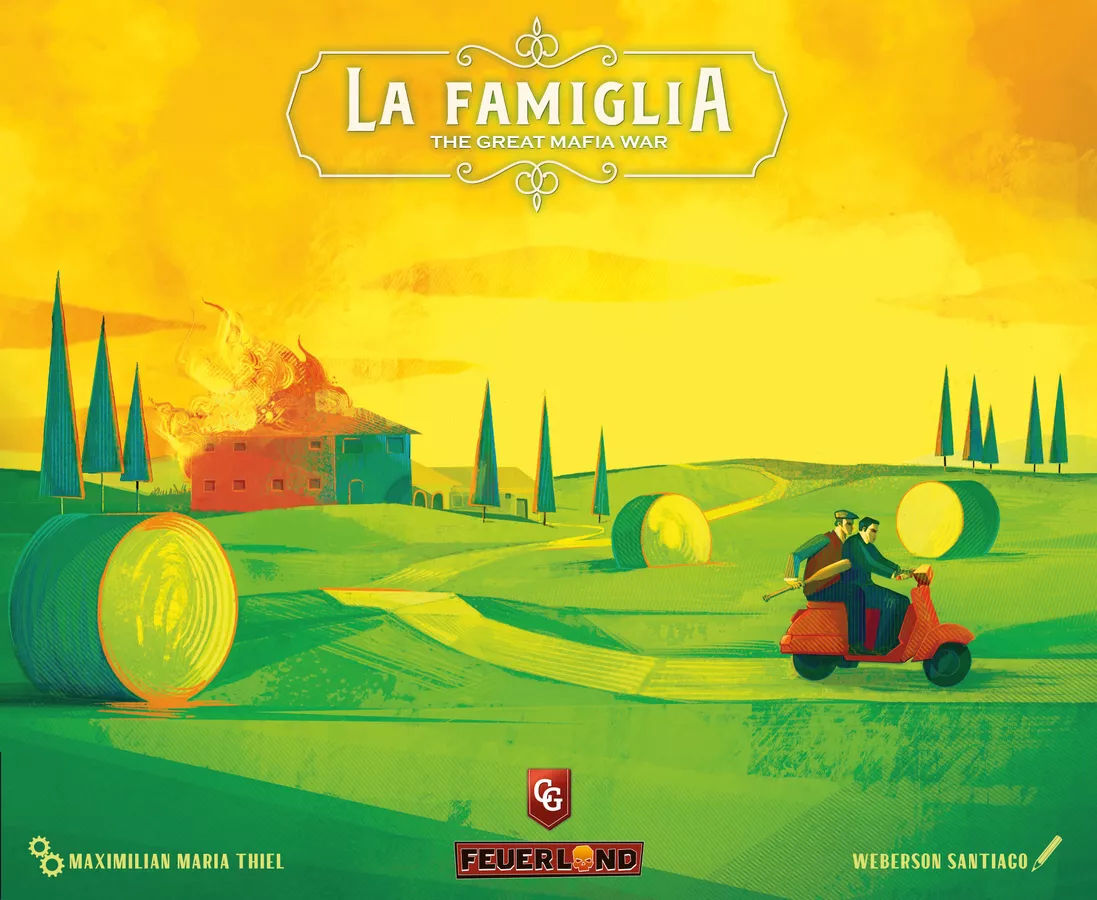
La Famiglia – The Great Mafia War
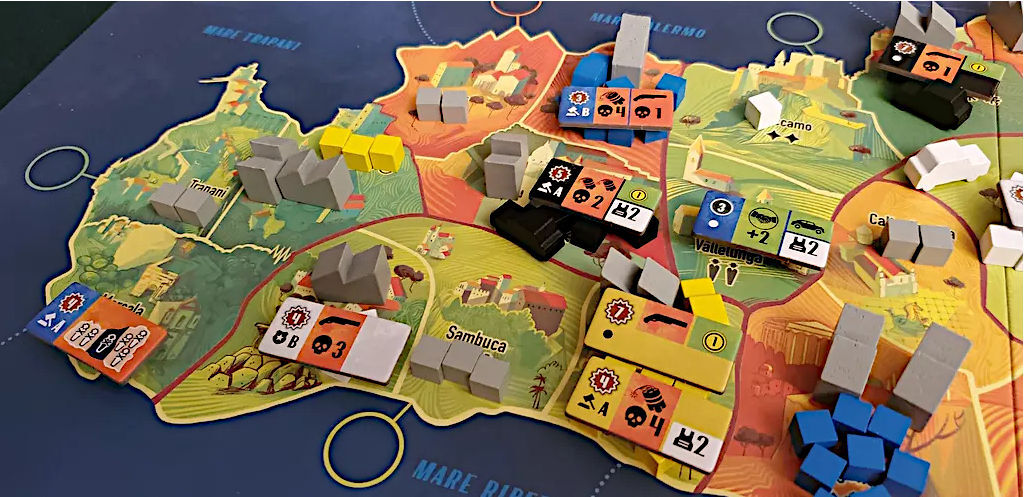
In La Famiglia, two teams play as mafia families battling for control of Sicily. The game is divided into two phases: in the planning phase, teams develop their skills and place fighters and secret orders on the board. In the combat phase, the orders are revealed and executed.
The board game is for exactly four players aged 16 and up. A game lasts 120 to 180 minutes. The first German edition was published in 2023 by Feuerland Spiele. Since then, the author Maximilian Maria Thiel has been publishing the game through his own label Boardgame Atelier.
The board game community is enthusiastic about La Famiglia – The Great Mafia War. On Boardgamegeek , over 1,200 users have rated it with an average score of 8.0, which classifies it as a “very good game”. Last year, it won the French game award As d’Or. In Italy, however, the game triggered a wave of outrage in early 2025 after the release of a localised version.
The reason: La Famiglia is based on the mafia wars of the 1980s in Sicily. In this strategic team game, two groups try to conquer territories through clever planning and combat. Shotguns and bombs are used in the process.
“Game offends the dignity of Sicilians”
Maria Falcone, the sister of anti-mafia judge Giovanni Falcone, who was murdered by the mafia in 1992, reacted with shock. Speaking to the Italian newspaper Corriere della Sera, she said: “I don’t understand how anyone could come up with the idea of developing such a game. It plays with the feelings of those who lost their lives serving the state. The mafia has only brought death to Sicily and Italy. The thought of such a game offends the memory of all those people who helped free this country [from organised crime].”
Sicilian politician Alessandro De Leo from the Forza Italia party called for a ban on the game. In an open letter to the regional president Renato Schifani, he wrote, according to Corriere della Sera: “This product offends not only the dignity of Sicilians but also devalues the daily commitment of millions of citizens who fight for legality and justice in our region.” He urges to “examine all possible measures to counter the spread of this game”.
Companion booklet to provide background information in future
In an interview with the Deutsche Presseagentur (dpa), German author Maximilian Maria Thiel stated that he had lived in Italy for a long time and felt very connected to the country. That was why he chose the Cosa Nostra as the theme for the game. A companion booklet explaining the background had originally been planned. They wanted to ensure that this would be included with all future reprints. “I am very sorry if people feel hurt by the game. That was and never has been my intention.”
In an interview with Spiegel Online, Thiel said: “I understand Falcone’s criticism; she is personally affected. I am very sorry. But I see in the debate that no distinction is being made between the internal mafia conflict, which is solely about dominance, and the political murders carried out by the mafia, which target those who openly oppose the mafia. The political murder of Falcone has nothing to do with the murders between the mafiosi that my game is based on.” Thiel also emphasises the abstract nature of the game: instead of realistic figures, neutral wooden blocks are used. He adds that there are over 500 mafia-themed and nearly 25,000 war board games, many of which have a much more martial presentation.
How realistic should games be allowed to be?
The controversy surrounding La Famiglia raises fundamental questions. The answers to these are never final but must be renegotiated time and again.
How realistic should games be allowed to be? Should they be allowed or required to handle certain topics only in a specific way? If so, which topics are these: war, violence, depression, poverty? How should games address these topics: in an educational, sensitive or shocking way? And who decides how these topics should be portrayed?
Whether La Famiglia will remain available in Italy or not remains to be seen. What is already clear is that La Famiglia shows once again that games are more than just a trivial pastime. They are a cultural asset, like books or films. Games bring history to life. They tackle themes and spark debates. This makes them an important part of cultural discourse.