
Oldest dice in the world: gambling in the Stone Age
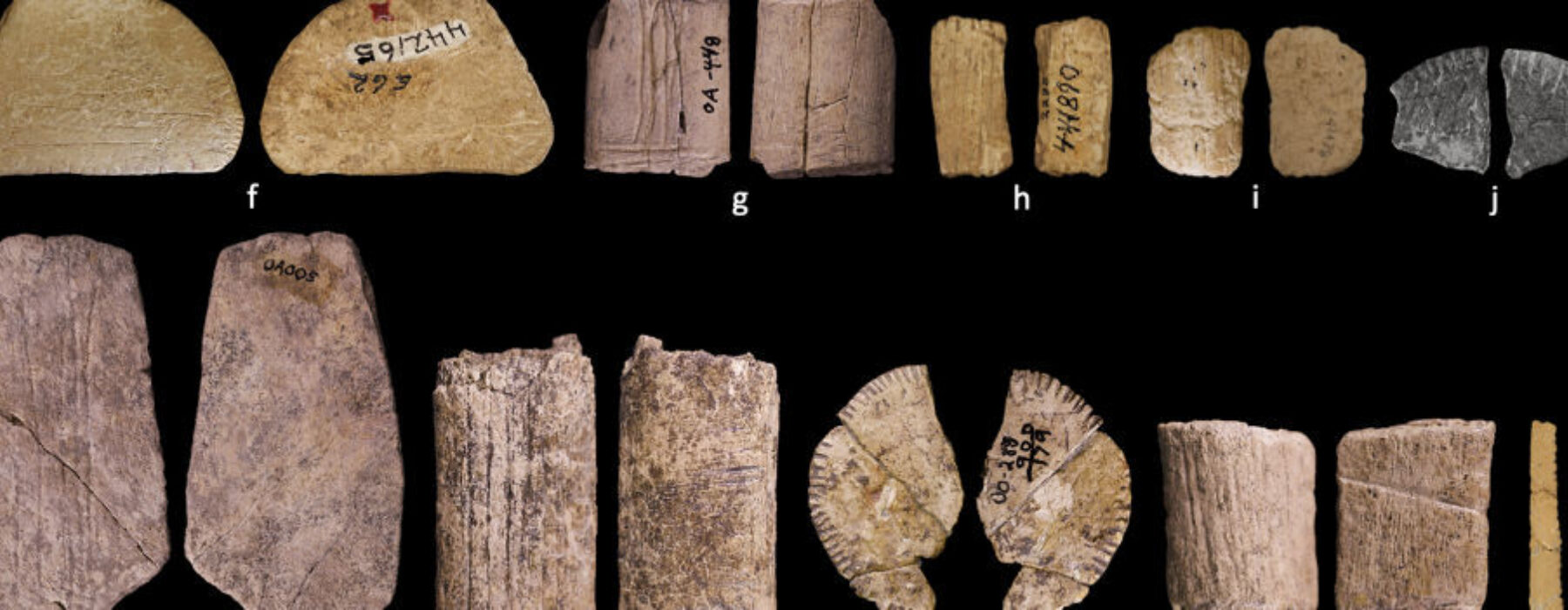
Archaeologists have discovered the oldest dice in the world in North America. More than 12,000 years ago, they facilitated trade and helped to defuse conflicts.
The sensation had been visible on shelves and in display cases for many decades. But it was not until 2026 that archaeologist Robert J. Madden from Colorado State University recognised the true significance of the prehistoric finds. Using a checklist, he searched through collections, museums and catalogues and thus discovered the oldest dice in the world. The scientist published details of his search in the specialist journal American Antiquity.
Until now, dice from Mesopotamia, today’s Near East, held the record. They are about 5,500 years old and date from the early Bronze Age. The North American dice are more than twice as old.
New checklist thanks to an old book
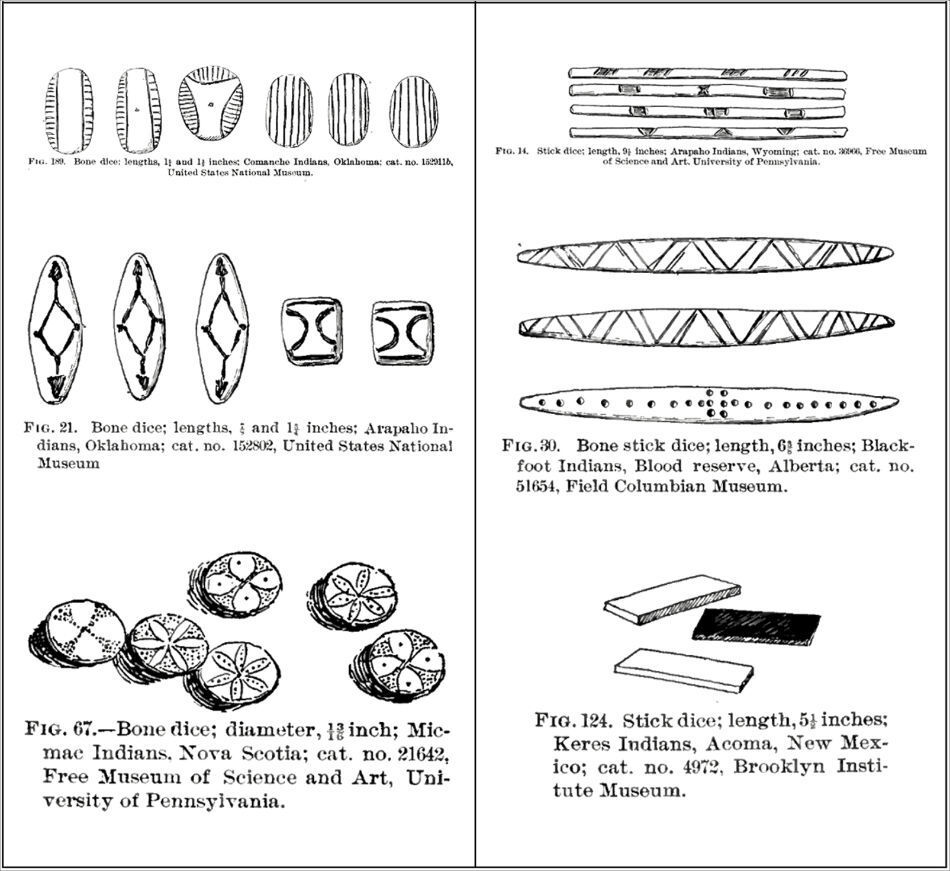
The tool for the discovery had also been publicly available for a long time – 119 years, to be precise. In 1907, ethnographer Stewart Culin published his book “Games of the North American Indians”. In it, he described nearly 300 dice sets of the Indigenous peoples of North America. Madden evaluated Culin’s book and created a list of typical features of gaming pieces.
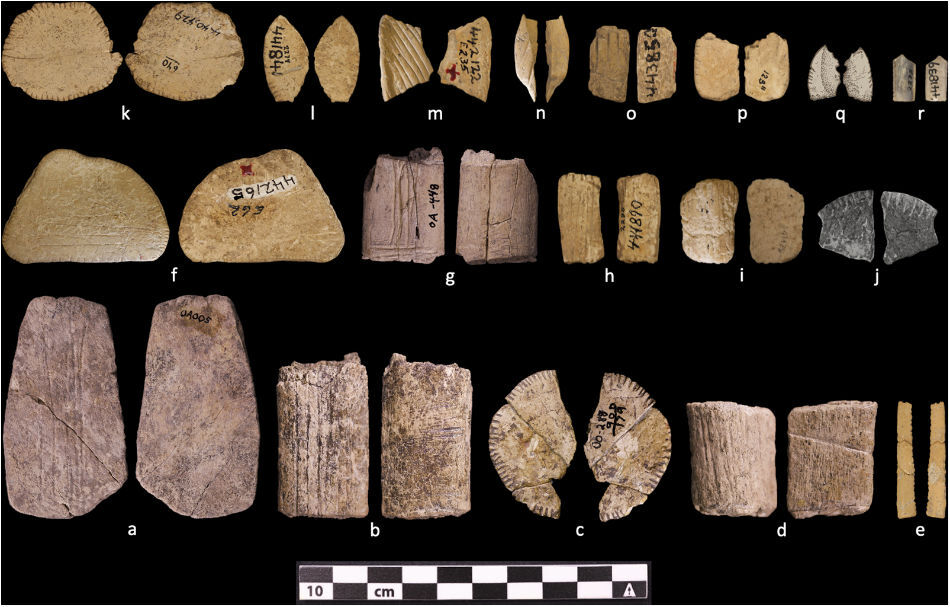
He then compared the list with prehistoric finds. This allowed him to identify over 650 dice or dice-like objects that researchers had previously misidentified or not recognised at all.
Dice made of bone and stone
The North American dice made of bone, wood and stone are more than 12,000 years old and come from twelve US states, including Wyoming, Colorado and New Mexico. Some of the oldest examples belong to the Folsom culture, which existed just before the end of the last Ice Age. At that time, people still roamed North America as hunter-gatherers. They hunted bison, white-tailed deer and rabbits. From the animals’ hides, sinews and bones, they made clothing, tools – and dice.
The prehistoric dice differ from today’s standard dice. They have only two sides instead of six. One of them is often marked. Some dice are flat like discs, others oval or elongated, and some are round on one side and flat on the other. The dice were often thrown in groups, with the marked sides allowing for different outcomes.
Gambling as a cultural practice
What particularly impresses Madden is the continuity: over more than 12,000 years, dice games have survived in some Indigenous communities, sometimes to this day. Gambling in North America is therefore not a European adoption but an independent, ancient cultural practice. This suggests that prehistoric groups in North America played a pioneering role in the invention of dice and gambling.
The finds also shed new light on the social role of games in early societies. According to Madden, gambling was not just for entertainment. It promoted contact between groups, facilitated trade and defused conflicts. In dice games, considerable values sometimes changed hands, such as hides, tools or clothing.
Ancient understanding of probabilities
Historians of mathematics also see the invention of dice and gambling as an early step towards understanding chance and probability. Dice produce results to which probability theory can be applied. The production and use of dice thus mark the beginning of conscious attempts to control, observe and analyse random events.
“The significance of the die as a tool for exploring chance is also evident in the fact that our modern understanding of probability theory has its roots in mathematicians of the 16th and 17th centuries such as Cardano, Galileo, Fermat and Pascal,” writes Madden. These mathematicians studied the principles behind dice rolls in gambling.
Research into gender roles
For Madden, his findings are just the beginning. Further research into dice and gambling could reveal even more, for example details about the social organisation, religion and worldview of the Indigenous peoples of North America. Madden would find it exciting to conduct studies on gender roles.
Evidence suggests that dice games of the Indigenous peoples of North America were gender-specific. An analysis of 131 documented games shows: in 81 per cent of cases, women played alone, in 12 per cent both genders played together and in 7 per cent exclusively men. “Further research could clarify whether this historical pattern can be traced back to prehistoric times,” writes Madden. If so, this could indicate that women played a leading role in social and intellectual innovations associated with dice and gambling.