
Friedrich Ebert – The Path to Democracy: From the digital game to the analogue card game
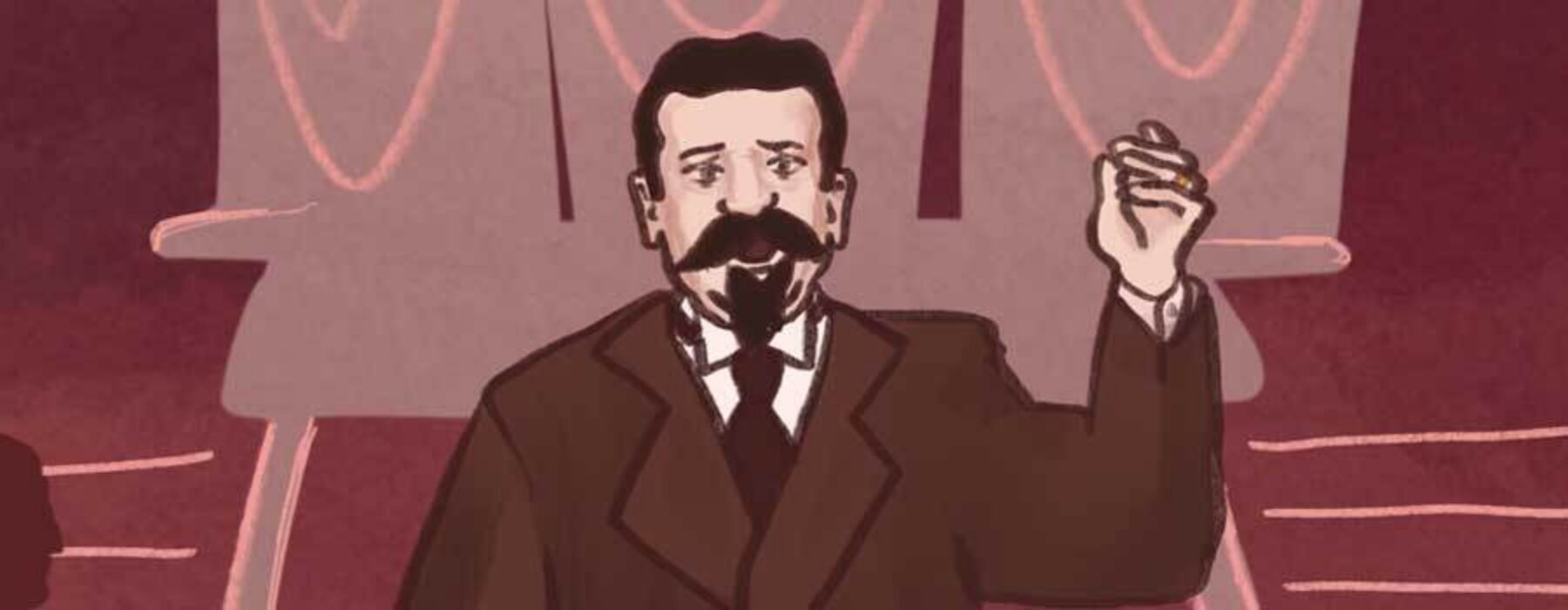
The digital game Friedrich Ebert – Der Weg zur Demokratie is to be released as an analogue card game. We spoke to Dr. Martin Thiele-Schwez from Playing History about it. An interview about serious games, fictional letters and the fight for democracy.
Friedrich Ebert – Der Weg zur Demokratie
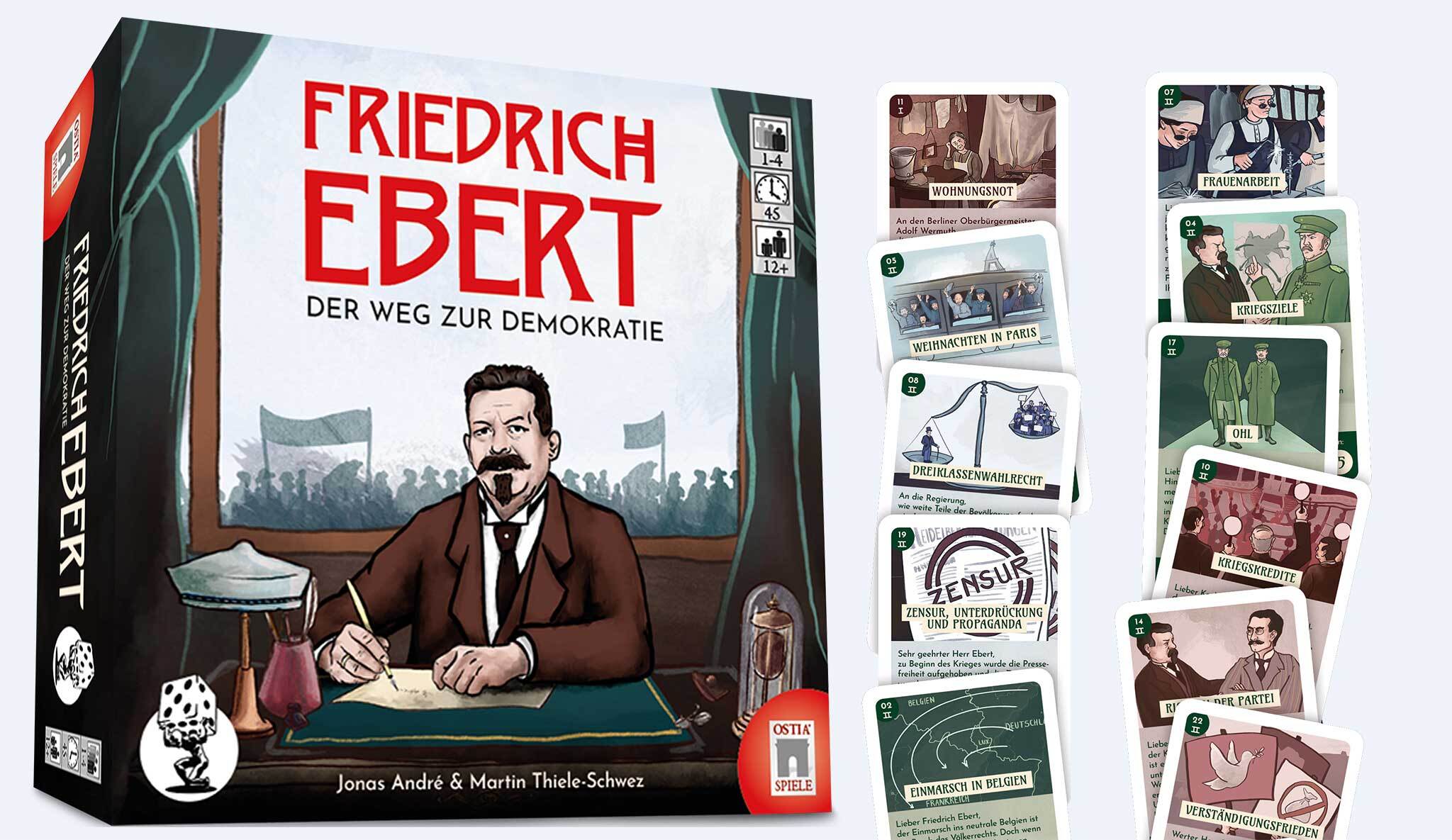
Democracy relies on mutual control. The card game Friedrich Ebert – Der Weg zur Demokratie is no different. Players act from Ebert’s virtual desk. Using letters, they learn about the political situation, social problems and challenges. Together, they must decide which of the constantly arriving letters to open and answer first to keep tensions between different groups under control. If the tensions grow too large before the chapter’s target card is reached, everyone loses together.
The analogue card game is based on the 2023 released serious game of the same name by the Stiftung Reichspräsident-Friedrich-Ebert-Gedenkstätte. It has been nominated for the “Best Serious Game” category at the Deutscher Computerspielpreis. Currently, a crowdfunding campaign is running on Spieleschmiede to realise the card game. The funding goal is €5,000.
Why a game about Friedrich Ebert and not about Konrad Adenauer, Theodor Heuss or Willy Brandt?
A year ago, we released a digital game about Ebert with the Stiftung Reichspräsident Friedrich-Ebert-Gedenkstätte . After the success of the browser game, Ostia-Spiele approached us. The publisher wanted to turn the digital game into an analogue card game. I’m convinced we could develop a meaningful game about other major German politicians too. But Ebert is particularly relevant today. Looking at the Weimar Republic, we can learn a lot from his life about what it means to fight for democracy and to stand up for its preservation.
You develop games for foundations, associations and companies. How much creative freedom do you have as a service provider during development?
During development, we’re in a constant, well-intentioned negotiation process. Ideally, we bring the game design expertise, and our partners bring the academic and historical expertise. We try to process relatively dry content in a way that makes interacting with it engaging. The academic partners check whether the portrayal of historical complexity is appropriate.
Our degree of freedom varies from project to project: some partners give us relatively free rein, while others are very closely involved in the process. The Stiftung Reichspräsident Friedrich-Ebert-Gedenkstätte took a very close look. This ensured that all texts – which also appear in the analogue game – are accurate and up to date with current research.
Even so, some texts in the game are fictional – for example, the letters to Ebert. Why?
When we started work, I read Walter Mühlhausen’s biography of Ebert. One term that particularly stuck with me as characteristic of Ebert’s life was “Problemstau” (backlog of problems). We thought about how to make this backlog visible in the game. We came up with the idea of needs from various groups piling up as letters on a desk. The game is designed so that it’s never possible to address all needs equally. It remains a matter of negotiation and prioritisation.
The letters are fictional. However, the foundation’s historians managed to capture the themes of the time in a concise and engaging way in the letters. It was important that the content could be validly justified and stayed close to historical events.
With mechanics involving dependencies between the individual letters, we stay as close as possible to historical sequences to avoid logical contradictions. For example, once the military leadership has admitted defeat in the First World War, the letter about the euphoria at the start of the war is removed from the game. This prevents the war euphoria from still being part of the game if the defeat has already been established in the gameplay.
The analogue game is based on a digital serious game. These are meant to convey information and education. Are they even games? After all, games are by definition purpose-free.
Serious games are defined by combining both aspects – serious and game. “Serious” means that historical and thematic aspects are treated earnestly, based on thorough research. The game doesn’t shy away from uncomfortable questions. This sets it apart from a classic Euro game, where themes are often watered down, interchangeable or follow false stereotypes.
I’m convinced that any kind of play, whether digital or analogue, leaves a learning effect – whether it’s about interaction and cooperation or the content of the games. Whoever plays, learns. And usually in a way that comes easily and is enjoyable. Friedrich Ebert – Der Weg zur Demokratie can be played in a way that lets us dive deep into the history of the Weimar Republic if we engage with it. But for people who just want to dive into an entertaining, cooperative game for an evening, Friedrich Ebert is also suitable – they’ll still come away with an impression of the Weimar Republic.
What are players supposed to learn when they play Friedrich Ebert – Der Weg zur Demokratie?
Different things: The game is a constant negotiation and prioritisation of needs – so it conveys that democracy is always a process of negotiation. We also depict forces working against democracy. Players learn that democracy must be defended. Through their active involvement, they are repeatedly faced with decisions. This teaches them that the Weimar Republic wasn’t doomed to fail deterministically, but was the result of decisions and omissions by many people. History is open. In addition, players get to know many people and topics of the time. They learn about the complexity of the Weimar Republic and the hurdles and struggles Ebert had to deal with, both professionally and personally.
In terms of pure media, they learn that engaging with serious topics can be fun – if the right medium is chosen.
Why is the medium of games particularly suitable for this?
The quality of the medium of games lies in the fact that people don’t passively consume them but actively engage. The gaming experience arises through active participation. Players must repeatedly negotiate what to do in each situation. The more immersive a game, the harder these decisions become. After all, a lot depends on them, and players don’t want to take unnecessary risks. By involving players in decisions, games evoke emotions that a film cannot trigger. I can feel ashamed because I made fateful decisions. Do we approve war credits, knowing it will put our party to the test? How do we welcome returning soldiers when the economy is in ruins? Unlike films or books, a game can also end differently depending on the decisions made.
How does the analogue card game differ from the digital game?
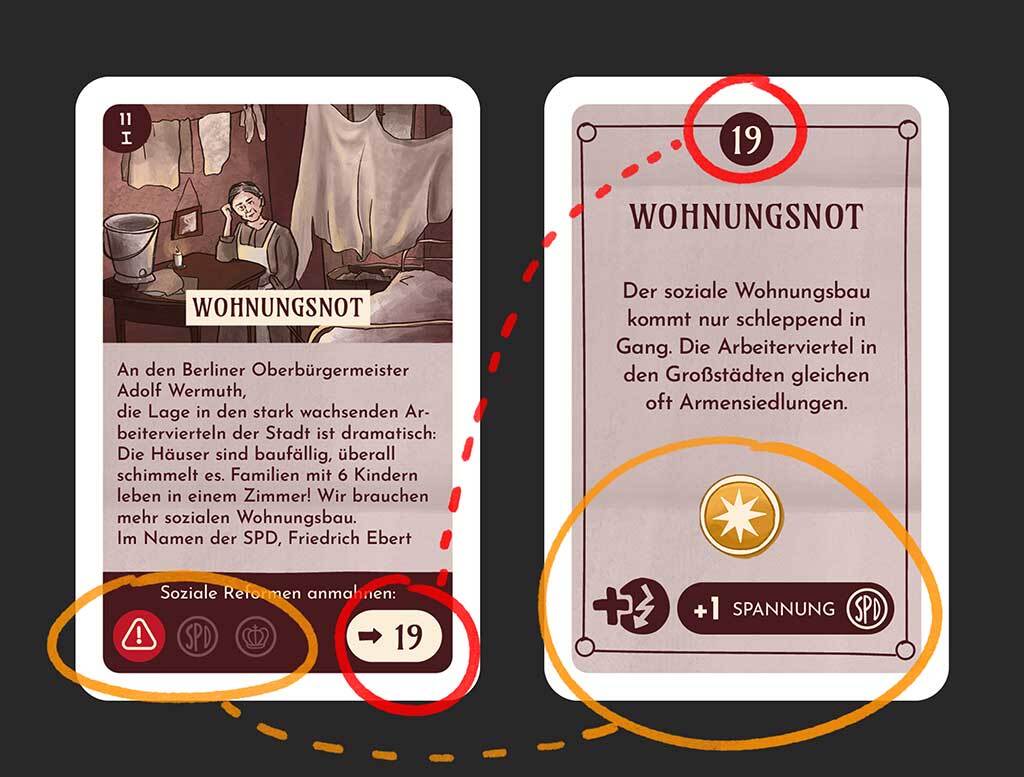
In its analogue version, it is a game that, like the digital game, can be played solo. However, it has been optimised as a cooperative game for a group. The aspect of joint negotiation – which makes many rounds so enjoyable – is a new addition. We’ve also revised the gameplay and, alongside the historically accurate variant, added game modes that allow for more variety. For example, the game includes a card deck that unlocks individual abilities for Ebert, which are linked to personal experiences.
How did the collaboration with Ostia-Spiele come about?
We’ve known Ostia-Spiele for a long time from board game circles. We like the publisher’s games and greatly appreciate the owners, Heike and Stefan Risthaus. Last year, we were at SPIEL 2023 in Essen. There, the game Weimar was a highlight. It caught my interest because we had just released the digital Ebert game. I got talking to Stefan. He shared my enthusiasm and was also impressed by our release. Stefan asked if we could imagine an analogue version in a cooperative multiplayer mode. The idea quickly turned into the project of developing an analogue game. Thankfully, the Friedrich-Ebert-Gedenkstätte Foundation supported us in this.
Why is the game being funded via crowdfunding?
Unlike most of our other productions, there is no specific client for the analogue version of Friedrich Ebert – Der Weg zur Demokratie. We are financing the game together with Ostia-Spiele and bearing the entire risk. Crowdfunding allows for a kind of reality check. We can see whether there is enough interest in the game to justify the effort (staff, production). Additionally, crowdfunding lets us offer extra options and gimmicks that we wouldn’t include in the regular box for various reasons.
Why did you choose Spieleschmiede instead of Kickstarter or Gamefound?
The overall package offered by Spieleschmiede, with its community and logistics for shipping, is a plus for us. This means we don’t need an additional logistics partner or a separate web designer. The Ebert project is designed purely in German, so a German crowdfunding platform is a good fit. Ostia-Spiele has also had good experiences with Spieleschmiede in the past.
The serious game is aimed primarily at educational institutions. The analogue game is not. Why?
We are not directly targeting schools and other educational institutions, even though I am convinced the game is very suitable for them. Not least because, in the accompanying booklet, we contextualise every event with background knowledge. The playing time also fits well into a lesson.
Above all, the game is meant to be fun. That’s why I’m convinced it can be played by anyone. This is confirmed by the initial reactions from prototype test rounds. Since the demands are not low, we recommend a minimum age of twelve. Naturally, it will particularly appeal to people who enjoy cooperative games and have an interest in history.
Which other analogue board games that deal with historical events do you like?
This list is long. Most recently, Weimar sparked great enthusiasm in me. However, getting a group of four players together for about six hours is challenging. Before that, Twilight Struggle was a game I loved for a long time and still do. Pax Pamir is also fantastic.