
Brettspiel Election 2020, You Decide: Conspiracy theories about Corona and the US election
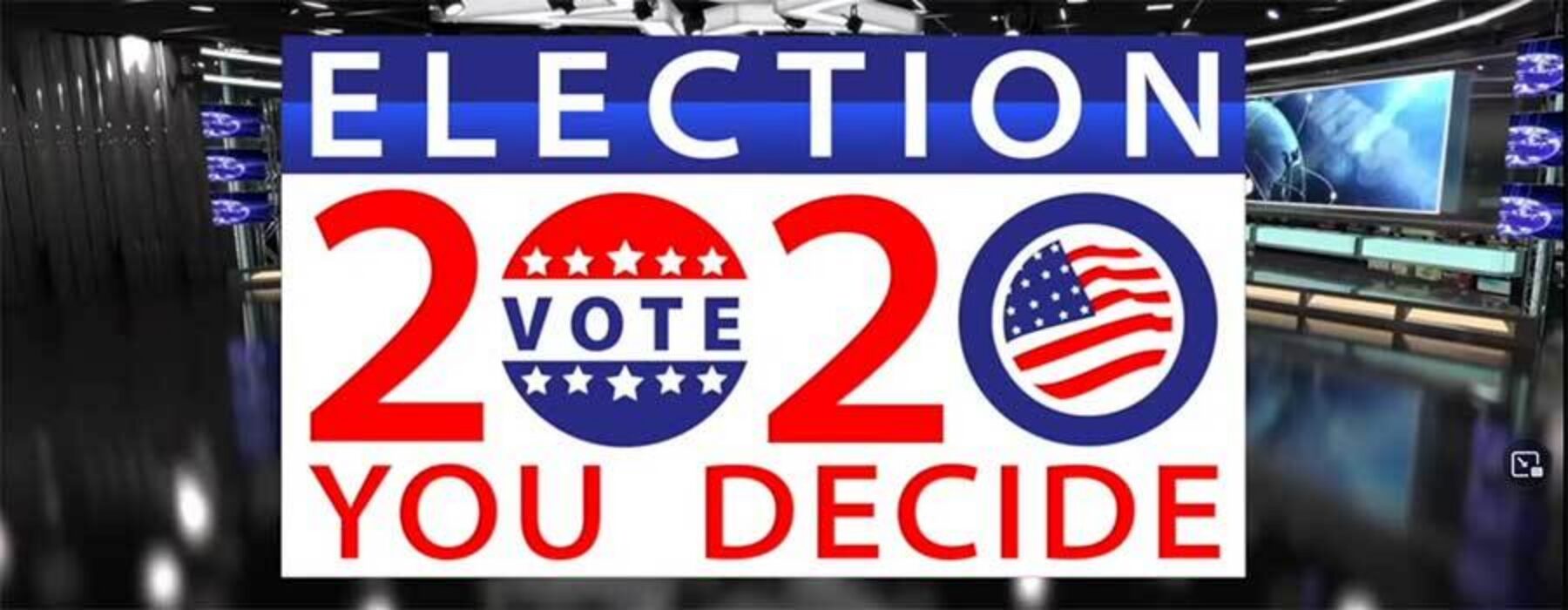
Enemies of democracy spread hate and conspiracy theories not only via the messenger Telegram, but also through board games. In Election 2020, You Decide, everything revolves around lies about Corona and the 2020 US election.
Let’s start with a clarification: “Election 2020, You Decide is intended solely for entertainment. Any similarity to living or deceased persons is purely coincidental – or intended as satire, parody or persiflage of these individuals. It is not meant to convey any true or factual information about these people, places or events.” This is what it says on the game’s website in dark grey letters on a light grey background. The well-hidden disclaimer is presumably there for legal reasons. The game’s message, however, is quite something.
Racist stereotypes and enemy schemas in games
What players can expect is revealed by Peter Navarro. In a video, the former trade advisor to ex-US President Donald Trump says: “Want to know how the Democrats stole the 2020 election? Play the game. Want to know how Tony Fauci probably helped develop a deadly virus in a communist Chinese bioweapons lab? Play the game. Want to get to the bottom of the fake news about Russia collusion? That’s right. Play the game.” Even though Navarro skilfully avoids making false statements – after all, he’s only asking questions – the direction is clear. The game thus contributes to the division of American society and weakens democracy.
Election 2020, You Decide is not the first game to spread enemy images. The phenomenon was already known during the First World War. “Battle and siege games trivialised combat, card games like the Weltkriegsquartett conveyed technical and military knowledge, and illustrations reinforced enemy images. Through play, children internalised friend-foe constellations, absorbed racist stereotypes and practised enemy schemas. While hostile nations were reduced to comic figures, the games glorified their own troops and allies,” writes Judith Fritz in the virtual exhibition “The First World War and the End of the Habsburg Monarchy”.
“Creators are trying to brainwash people”
Election 2020, You Decide doesn’t just rely on friend-foe dynamics but also on disinformation. Anyone looking for supposed evidence of conspiracy theories can scan QR codes. These lead to videos that are meant to prove the disinformation. “So the board game isn’t just a harmless little ‘let’s-play-this-with-our-Maga-friends’ game [Maga stands for ‘Make America Great Again’, editor’s note]. It’s propaganda. When the game links to videos or articles, the creators are trying to brainwash people. This isn’t some harmless little scam. It’s a way to spread even more far-right propaganda,” criticises Farron Cousin on the show Ring of Fire.

Election 2020, You Decide as a “Trojan horse”
The game’s supporters aren’t even trying to refute this claim. On the contrary. David Clements said on the show “Economic War Room with Kevin Freeman”: “What matters to me is that we need to wake people up, and this [game] seems to me like the perfect Trojan horse to get into people’s living rooms.” His hope is that as many people as possible will notice the videos through this “Trojan horse”. Clements was previously a professor at New Mexico State University. However, according to media reports, the university fired him after he rejected the mask and vaccination rules on campus. Clements is also said to have spread lies about the alleged voter fraud in the 2020 US presidential election.

In the show, Clements displays one of the videos (visible at 6:02 minutes). In it, current US President Joe Biden says: “We have put together I think the most extensive and inclusive voter fraud organization in the history of American politics.” In German: “Wir haben die wohl umfangreichste und umfassendste Organisation zum Thema Wählerbetrug in der Geschichte der amerikanischen Politik aufgebaut.” The creators of the game liked the quote so much that they printed it in large letters on the edge of the box. What goes unmentioned is that it was taken out of context. Biden hadn’t admitted to voter fraud but had been talking about a voter protection programme. His team had launched this in anticipation of possible legal disputes over the election result. This is confirmed by numerous fact checks, see for example here, here or here. The quote taken out of context is just one of many examples of the disinformation in the game.
“Disinformation is used to divide society”
That it’s not a good idea to package disinformation in a playful way – even if it’s meant to be funny – has already been shown by Make Fake News Great Again. Election 2020, You Decide is another example of this. The Correctiv Research Centre warns: “Targeted disinformation is used to divide our society, spread hate or do business.” According to the Federal Agency for Civic Education, disinformation aims to destroy or undermine truths and beliefs accepted within societies: “Often the goal is to undermine the legitimacy of institutions or individuals that are of central importance, particularly in majority-based, democratic systems of government.”
In addition to the disclaimer, the game’s homepage includes another note. Right on the start page it says: “Election 2020 brings fresh air for voters on both sides of the political spectrum and offers an opportunity to ‘Let’s laugh, let’s heal’ – with bipartisan banter, political fact checks and hilariously funny jabs at the personalities behind the campaign.” Healing instead of dividing? On the site you can not only buy the game for 49.95 US dollars, but also T-shirts with the print “Let’s Go Brandon” for 20.95 dollars. The slogan is an insult directed at the 46th US president and, according to Wikipedia, a synonym for the battle cry “Fuck Joe Biden”. That is neither hilariously funny nor healing. And it is certainly not satire to work on destroying a democracy. Disclaimer or not.

