
Spear’s Games: Virtual journey through the history of games
The German Games Archive is the memory of the games industry. It stores more than 30,000 board games. Due to Corona, it is currently closed. With Google Arts & Culture, interested parties can still browse the shelves and dive into the history of Spear’s Games, a family business that made games history.
In 2017, Francis and Hazel Spear donated a treasure to the German Games Archive in Nuremberg: the product archive of Spear’s Games. It consisted of more than 2,000 board games and documents from the traditional company. Anyone who wishes can explore selected objects from the collection on Google Arts & Culture since February.
Angel game as a bestseller
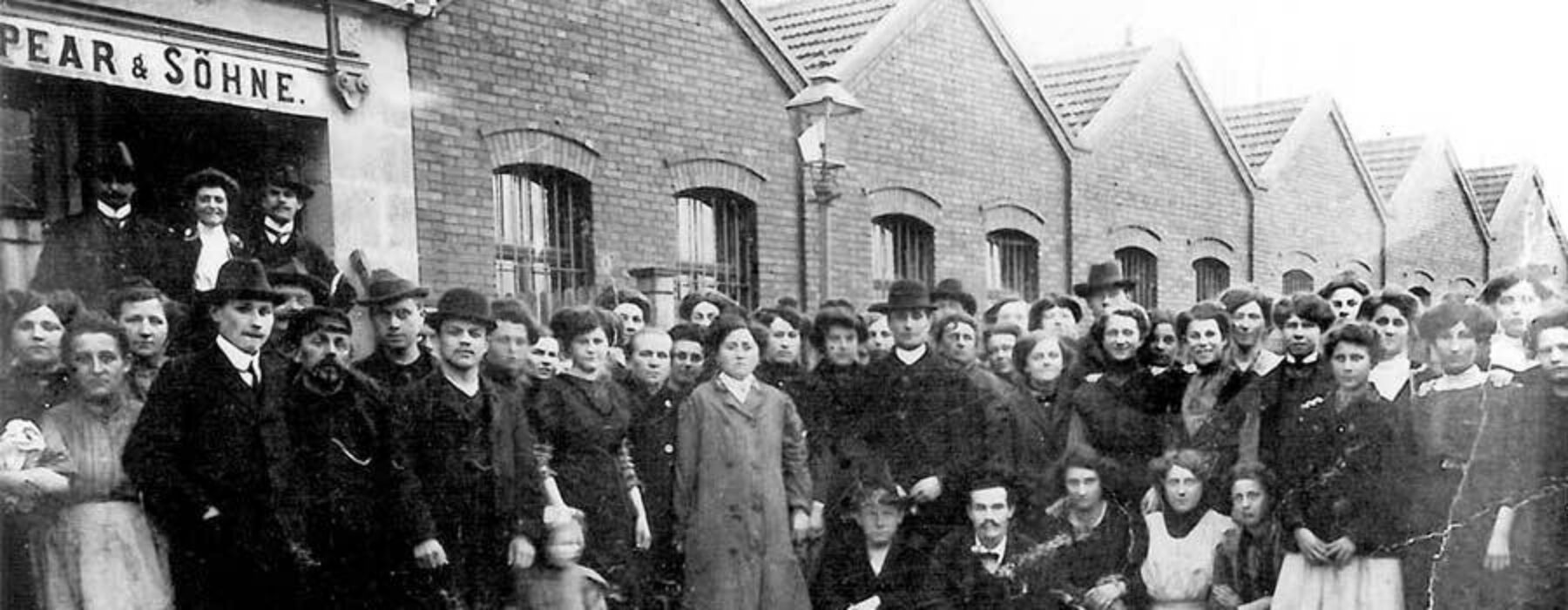
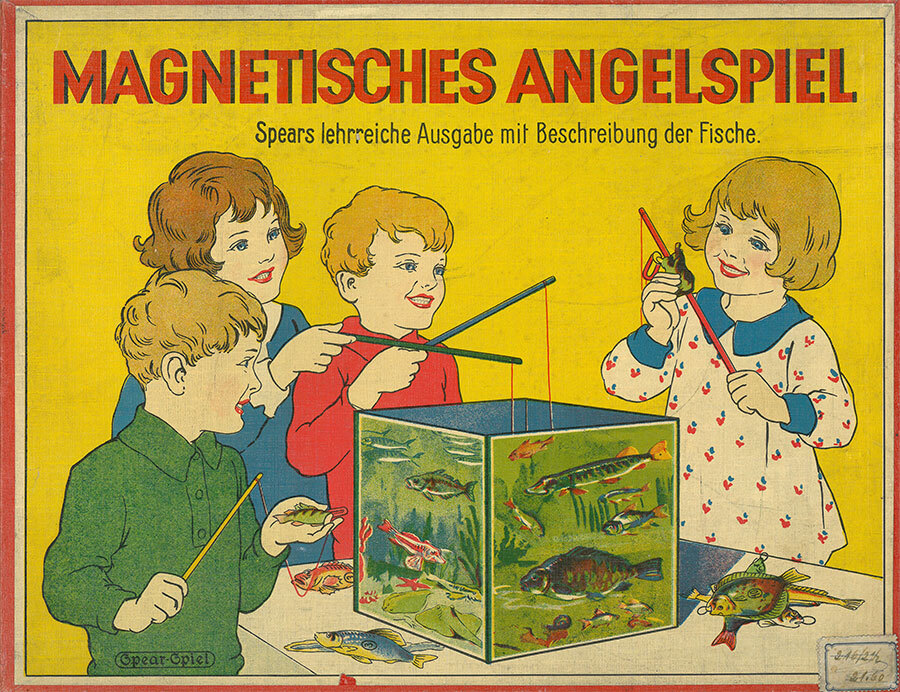
The Spear story began in 1879. At that time, Jacob Wolf Spear founded an import and export business for haberdashery in Fürth. Soon, he specialised in the production and distribution of games. Over the following decades, J. W. Spear & Söhne became one of the largest game manufacturers in Germany. From 1899, the company, now in its second Spear generation, produced classic board games such as Nine Men’s Morris, draughts and Halma, as well as numerous party, dexterity and activity games at its new location in Nuremberg-Doos. Thanks to their high-quality equipment and intensive marketing, they sold extremely well. With the Magnetic Angel Game and the popular table tennis sets, Spear succeeded in establishing new classics.
‘Aryanisation’ of J. W. Spear & Söhne
The global economic crisis of 1929 was weathered by J. W. Spear & Söhne relatively unscathed thanks to clever product policy and the founding of a British subsidiary. However, with the rise to power of Adolf Hitler in 1933, the Jewish family business was increasingly subjected to antisemitic agitation and boycotts. As part of the ‘Aryanisation’, company director Hermann Spear was forced to sell the company far below its value in 1939. The family did not receive a single penny of the agreed purchase price. The beneficiary of the ‘Aryanisation’ and new company manager was the Nuremberg entrepreneur Hanns Porst. Until the war-related destruction of the factory, he continued to publish Spear classics under the name ‘Euer Onkel Hanns’, as well as propaganda versions of popular board games, such as Bombs on England or Flying Through Greater Germany. Hermann Spear and eleven other family members were murdered in concentration camps.
Success thanks to Scrabble licence
Part of the Spear family managed to flee to Great Britain in time and continued the business at the branch established in Enfield near London in 1930. After the end of the Second World War, Hanns Porst had to return the destroyed factory to the Spear family. Production in Nuremberg only slowly resumed, and Enfield became the company’s main location. By acquiring the Scrabble licence for Europe in the 1950s, the family business was able to return to its pre-war success. Spear’s Games then achieved a much-noticed stock market listing, and sales figures rose. When the company secured the worldwide marketing rights for Scrabble in 1968, Spear was once again one of the biggest names in the games industry.

Mattel buys Spear’s Games
In the 1980s, the cards in the games industry were reshuffled: shopping centres and supermarkets changed established distribution structures. At the same time, toy giants like Hasbro and Mattel discovered the board game market. To survive, Spear invested in new developments, reissued successful classics and acquired game licences. The company sites were modernised, acquisitions of other game manufacturers and international cooperations were intended to secure the market position. As part of the restructuring, the Nuremberg site was closed in 1984. The restructuring measures had the desired effect: Spear’s Games was financially sound when owner Francis Spear, born on 17 June 1931 in Fürth, and his wife Hazel planned their retirement in the early 1990s. Since handing over the management to a family member was not an option, sale negotiations were initiated. In 1994, Mattel finally acquired the traditional company.
Spear archive as a gift
Over the decades, a product archive had been built up at the Nuremberg site. After the factory closed in 1984, the collected games and documents were moved to Enfield and merged with the archive holdings there. When Mattel acquired the company ten years later, the history- and family-conscious Francis Spear saved the historic game collection from dissolution. It was important to him that the eventful history of his company and his family should not be forgotten. Together with his wife Hazel, he founded a foundation to establish and maintain the Spear’s Games Archive. With great commitment, he reviewed, organised and supplemented the valuable game holdings and documents from the history of his company and his family. In 1996, the private Spear’s Games Archive was opened near Ware/Hertfordshire.
For health reasons, Francis Spear could no longer manage the collection. To ensure the long-term continuation of the games archive, it was important to Francis Spear, his wife Hazel and the other members of the Spear Foundation to donate the archive, with all its games, images and other documents, in its entirety to Nuremberg – as a gift to the city with which the family business had been closely connected for decades, through good times and bad. Given the injustice suffered by his family during the Nazi era, this was by no means a matter of course. The archive thus returned to the place where the history of Spear’s games once began. With the support of the Spear family, the archive was inventoried and gradually made digitally accessible, for example on Google Arts & Culture.
By the way: Google Arts & Culture also features other documents and information about board games, including the online exhibitions American Board and Card Game History by the National Museum of Play (USA), A Game of Thrones – How Chess Conquered the World by the Salar Jung Museum (India) or Womanopoly by the Black Cultural Archives (United Kingdom).
All photos in this post are from the Museums of the City of Nuremberg, German Games Archive.