
Games with dice that score points promote maths skills
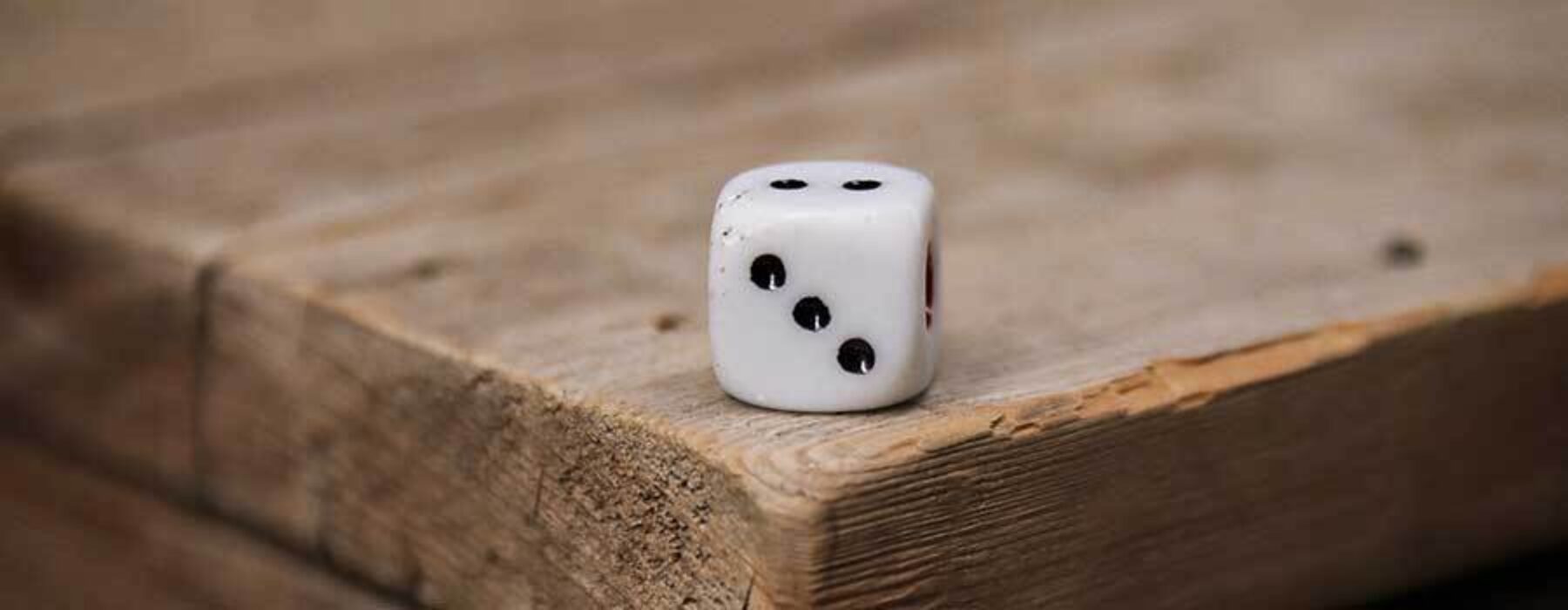
If you want your children to develop maths skills, you don’t need to rely on mathematical learning games. Simply playing basic board games with number dice is enough, rather than using games with colour or symbol dice. That’s the conclusion of a scientific study.
Learning games are a contradiction in themselves. At least, if you go by Johan Huizinga’s definition of play. It states:
Play is a voluntary act or occupation, executed within certain fixed limits of time and place, according to rules freely accepted but absolutely binding, having its aim in itself and accompanied by a feeling of tension, joy and the consciousness that it is ‘different’ from ‘ordinary life’.
Johan Huizinga, Homo ludens
Play is therefore without purpose. Learning games are not. They instrumentalise play for interests outside the game itself. With Die freche Sprechhexe by Ravensburger, everything revolves around language development; with ABC-Zauberduell by Haba, children are supposed to learn the alphabet; and with Ich lerne rechnen by Jumbo, the focus is on counting, addition and subtraction.
Advantages in counting
Yet children aged between four and six can also develop better maths skills by playing simple board games like Mensch ärgere dich nicht. That’s at least the conclusion of the study “Fostering early numerical competencies by playing conventional board games”. It was conducted by Professor Dr Hedwig Gasteiger, a mathematics education expert at the University of Osnabrück, and Korbinian Möller, Professor of Mathematical Cognition at Loughborough University (UK).
According to the study, children develop better mathematically if they play board games with number dice rather than colour or symbol dice. In a before-and-after comparison, children who had played games with number dice performed better in counting, recognising structures and using those structures. Structures are important for meaningful calculation. To achieve this, we need to understand numbers in their abstract quantity and their relationships to other numbers. This also applies to the construction of the decimal number system and the logic of arithmetic operations. These contents build on each other hierarchically. If a person hasn’t understood thought A, they cannot understand thought B, which builds on it, or cannot understand it correctly.
Long-term positive effects
Moreover, according to their own statements, Gasteiger and Möller observed a significant difference between the comparison groups even a year later. Positive long-term effects of playing board games with number dice on recognising and using structures had been shown.
“Until now, it was known that specially developed games with a learning focus have a positive effect on numerical development. However, the effect of conventional board games had not yet been proven,” says Gasteiger. “Our study shows that playing conventional board games with traditional number dice is an effective and very low-threshold way to promote early numerical skills. So it’s worth going back to game classics like Mensch ärgere dich nicht or Fang den Hut.”
“Everything can be maths”
Dr Jörg Kwapis is a qualified educational scientist and dyscalculia therapist. Since 2000, he has held key positions at the Centres for Therapy of Arithmetic Difficulties (ZTR) in Potsdam, Berlin and Freiburg. The ZTR assumes that 20 to 25 percent of children have not fully or only partially understood the logic of numbers up to 100 by the end of the second grade. The Ravensburger press office asked him the following questions.
What can parents do if their children struggle with maths?
If parents or teachers notice persistent problems with arithmetic, these should be examined in detail as part of a mathematical learning assessment. The aim is to determine up to which of the hierarchical learning contents the children have understood them, and from when the contents are not understood. If the knowledge gaps are in the elementary area of number and arithmetic operation understanding, this is referred to as arithmetic difficulty/dyscalculia. A remedial mathematical learning process, such as that carried out in dyscalculia therapy, should start at the point where the child’s mathematical knowledge breaks down. This is fundamentally possible at any age. However, the earlier the problem is identified, the sooner those affected can overcome it and the fewer painful experiences they will have in connection with the arithmetic problem. I recommend that parents whose children struggle with maths contact experts in mathematical learning and its problems as early as possible.
What can be done to prevent problems in maths from arising in the first place?
Parents should ask their children a lot of questions and discuss things with them. This applies generally and especially to mathematical questions. Everything can be maths: discovering patterns, structures and relationships and describing them, as well as logical deductions and the resulting if-then relationships. Parents can discuss quantities and numbers up to ten with their children at an early stage, solve number puzzles and play with numbers. This supports children in thinking about numbers and their relationships.
How can maths be fun?
Above all, by teaching maths with joy. For me, this means, for example, playing with numbers and shapes. People like patterns and ornaments. What fits together, what doesn’t? Which explanation makes sense here? How can this be described and drawn well? Maths is fun when it comes in the form of questions and puzzles. These can be puzzles with numbers and shapes, they can be matching puzzles with matchsticks, they can be brain teasers, but also logical deductions in a tricky situation. Maths can be fun when it invites and challenges us to engage with it mentally. And above all when my thoughts and solutions are not always graded.