
Puerto Rico 1897: culturally correct reissue of the board game classic?

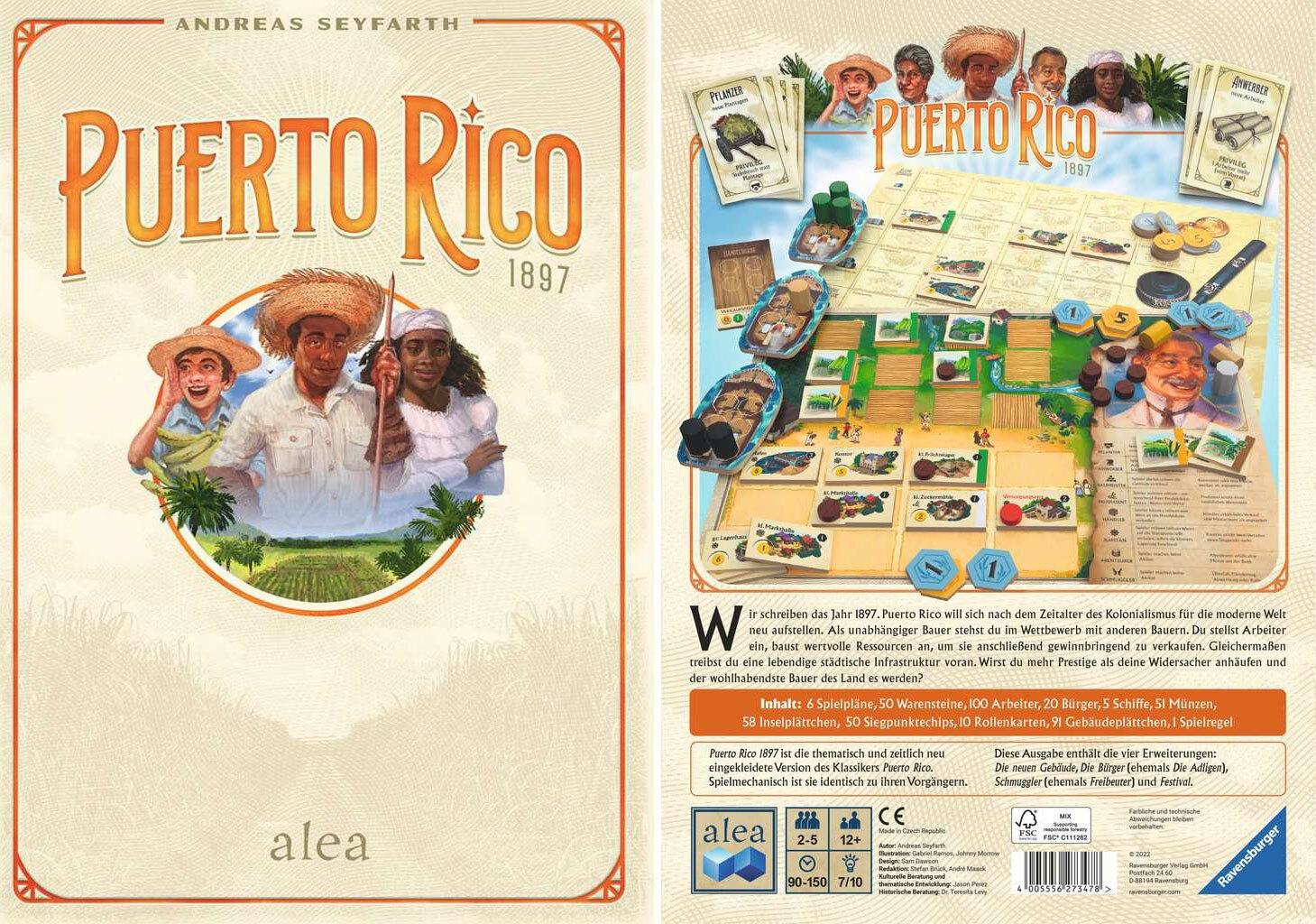
Ravensburger has withdrawn the children’s book Der junge Häuptling Winnetou because it hurt other people’s feelings. With Puerto Rico, the publisher took a different approach. It revised the board game with cultural consultants. Now it is no longer set in the colonial era, but in 1897. We took a look at the game and discovered new buildings as well as old acquaintances: the brown workers are back.

Why is there a new edition of Puerto Rico?
There have been discussions for years about Puerto Rico and its portrayal of colonialism and slavery. “We responded to this in the current edition [from 2020],” said alea editor André Maack in 2021 in an interview with kulturgutspiel.de. “Among other things, there are no longer any brown colonists, but purple workers. However, we realised that this was not enough. With the new edition, we want to do even better and publish an unproblematic version of the game.” Puerto Rico is a strong brand. Ravensburger therefore did not move the “unproblematic version” to outer space, another country or a new cultural sphere, but to the year 1897.
Why is Puerto Rico set in 1897?
On 25 November 1897, the Spanish colonial government approved the Carta Autónomica. It granted Puerto Rico political and administrative autonomy. However, this was short-lived. In 1898, at the outbreak of the Spanish-American War, the United States invaded Puerto Rico. Since then, the status of Puerto Ricans has barely changed. To this day, they are second-class Americans. The political status of Puerto Rico is also still disputed. The new edition’s manual states:
“Without denying or concealing the advantages and disadvantages of American occupation, Puerto Rico 1897 nevertheless highlights a rather unknown history: that of the Puerto Rican farmers and the active role they played in the modern development of the island.”
What has changed besides the year, and what hasn’t?
The rules and mechanics of Puerto Rico 1897 are identical to the previous versions. The box is numbered 4. The new edition includes all expansions: The New Buildings, The Citizens (formerly The Nobles), Smugglers (formerly Privateers) and Festival. However, we are no longer capitalists or merchants, but autonomous and self-determined Puerto Rican farmers in 1897.
Who decided which things were changed?
Puerto Rico 1897 was developed in collaboration with Puerto Rican experts in culture and history. Jason Perez served as cultural consultant, Dr. Teresita Levy as historical consultant.
Perez runs the YouTube channel Shelf Stories. He says: “I felt the same as many other Puerto Ricans. I was uncomfortable with the game’s portrayal of slavery. For the 2020 version, I published a video noting that the game’s setting was based on a history that never existed. André Maack from alea contacted me because of the video and offered me a personal conversation. I told him that I didn’t just want to talk about it, but really wanted to change something. That’s how the ball got rolling. I also exchanged ideas closely with Dr. Teresita Levy, Professor of Latin American and Latino Studies at Lehman College in New York City.”
Which goods and buildings were revised?
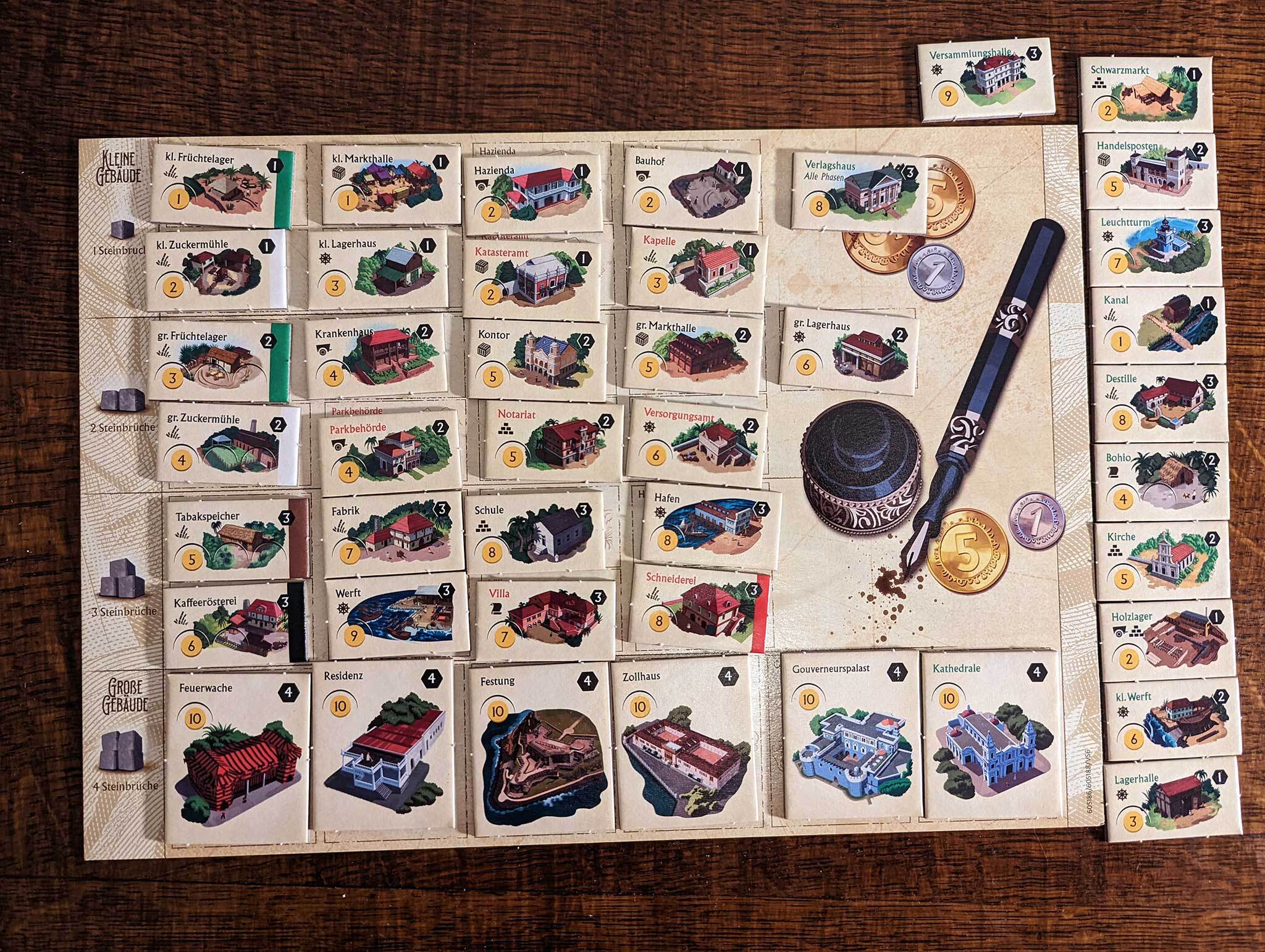
“Our team revised every aspect of the game down to the smallest detail – from the narrative to historical accuracy and imagery,” says Filip Francke, Global Head of Games at Ravensburger. The result: instead of indigo, we now produce fruit. The 10-point buildings now show landmarks that already existed in 1897, such as the Governor’s Palace “La Fortaleza” in San Juan or the town square in San Sebastián. Doubloons are now called coins. The jeweller has become a tailor, the hunting lodge the park authority, the hospice a hospital. And so on and so forth.
According to Ravensburger, goods and buildings were revised to fit the new time period both historically and culturally. The rulebook explains the background to this and the country’s history over three pages. These explanations are sometimes very specific, but often quite general. If you want to know exactly why this or that building was replaced, you won’t find much. The same applies to indigo. It is not mentioned at all why it no longer appears in the new edition.
Why are there brown workers again?
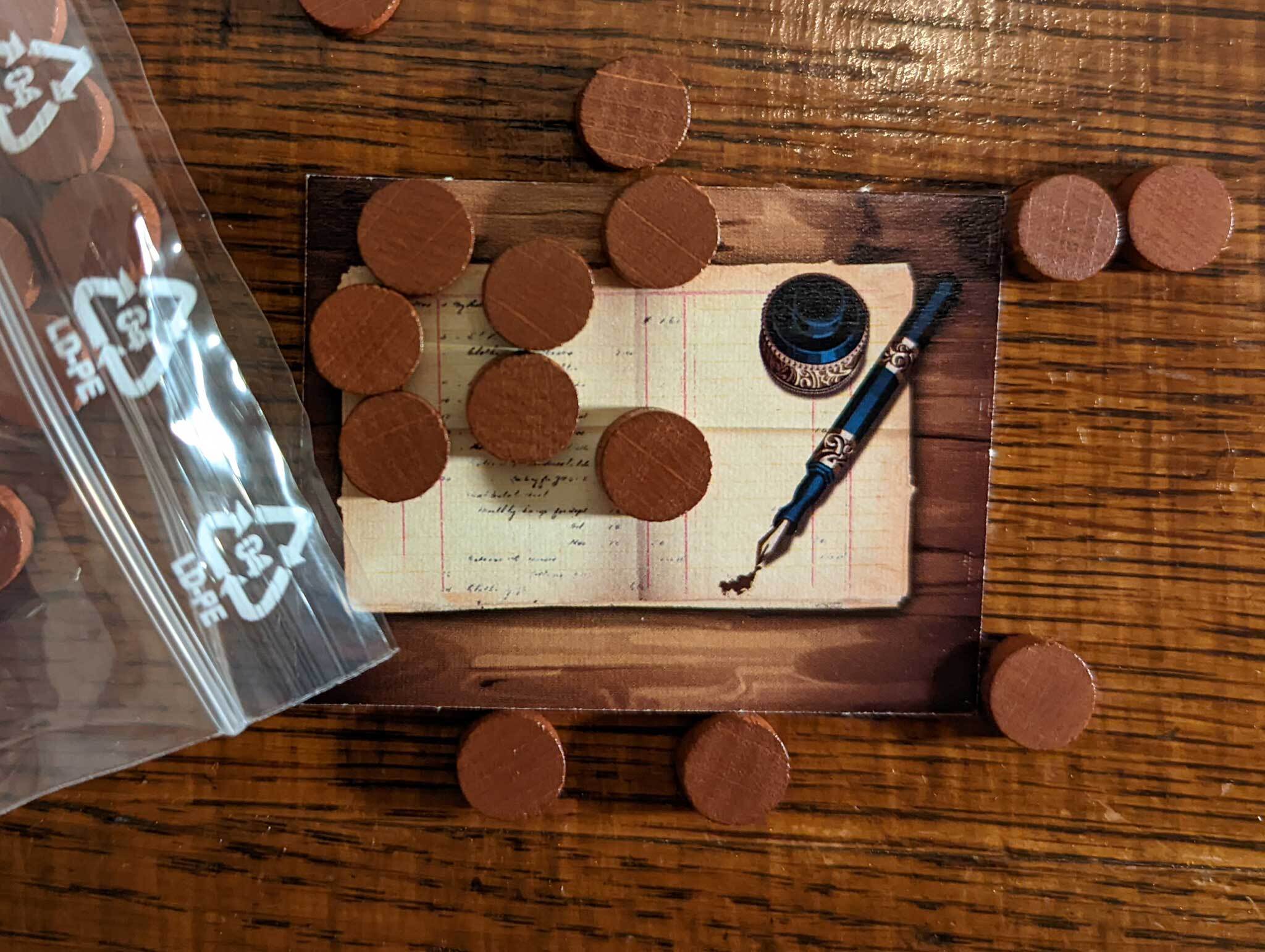
André Maack said in an interview a year ago: “The purple workers in the current edition are culturally ignorant. Puerto Ricans are not purple, but have different skin tones, from very light brown to very dark brown. The recommendation [from the cultural consultants] was therefore: use different shades of brown on the discs to represent reality as authentically as possible.” Ravensburger partially followed the recommendation. Brown yes, different shades of brown no. “Discs in different colours could suggest different values or functions and confuse players,” says Maack. Instead, Puerto Rican artist Gabriel Ramos drew ten characters for the double-sided player boards – children, women, men, seniors, with different skin colours. The portraits are meant to show the diversity of the Puerto Rican population. The brown discs are intended to be seen as extensions of the portraits.
By the way: in the original, the brown discs were called colonists and arrived by ship; later, we recruited purple workers at a recruitment office. Today, we get the brown workers from the employment register.
What new roles are there?

Governor, Captain, Merchant and Builder remain unchanged. The Gold Digger is now an Adventurer, the Settler a Planter, the Foreman a Recruiter, the Overseer a Producer and the Privateer a Smuggler. There are no female role designations.
What else do I need to know about the new edition?
The game has all the strengths and weaknesses of the previous edition. It is still a great game. There is still no insert. The buildings are double-sided, but the illustrated side lacks a description of the building’s function. The instructions are still not gender-neutral. Ravensburger uses the generic masculine. All the roles in the game are male. On our player boards, however, women are depicted. The instructions state: “Women often worked on the various tasks of a farm in the same way as men. Some women even owned farms themselves.”