
No majority for board games in the Bundestag
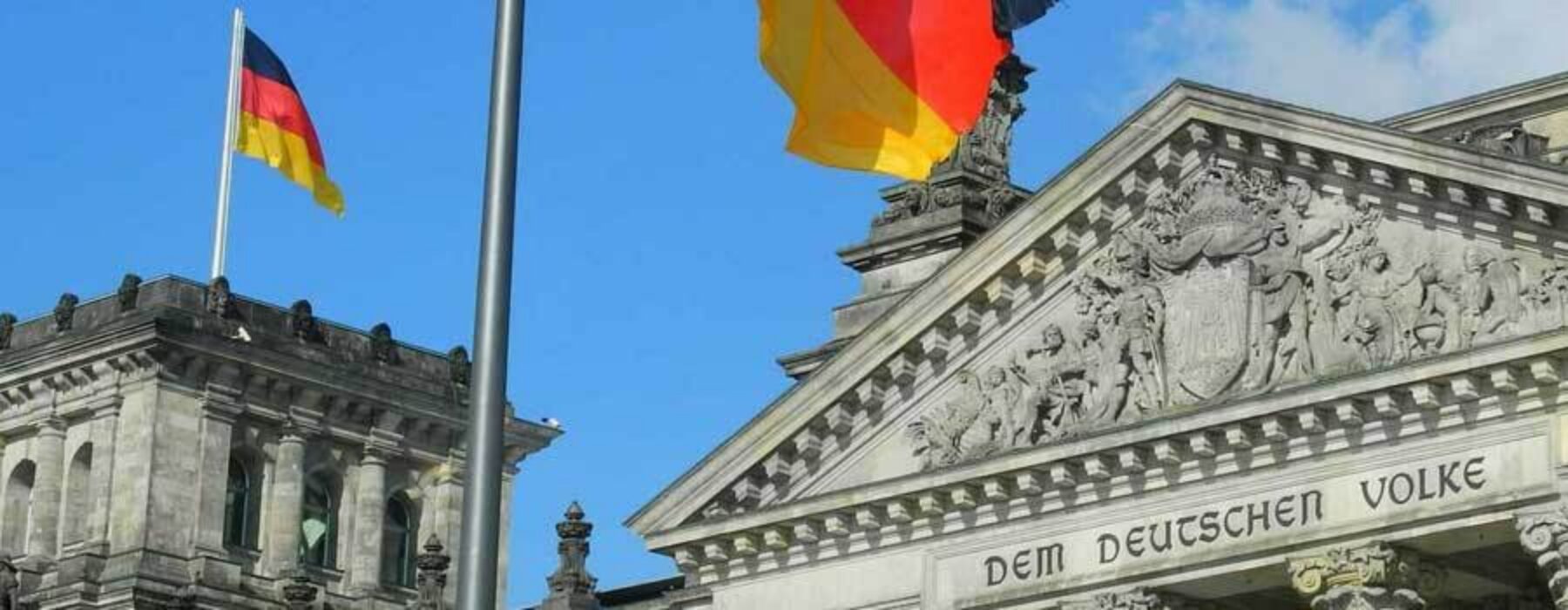
The FDP wanted to improve the framework conditions for female and male game designers. In the Bundestag, they engaged in a heated debate with other parties on this – and lost. We document the failed attempt.
This article is from “Null Ouvert – Magazine for Analogue Gaming Culture”. You can find more information about the magazine in this post.
Opening Move
On 27 October 2020, the FDP parliamentary group submitted the motion “Recognise games and game designers – improve legal and remuneration framework conditions” to the Bundestag. We already fully documented this in November 2020. With the motion, the FDP group advocated for games to be recognised as part of a holistic cultural mission, just like books. The FDP pointed to the cultural and economic significance of analogue games and called for a regulatory gap to be closed. They wanted to achieve a uniform database for board and card games, the establishment of a nationwide inventory and a legal entitlement for game designers to receive library royalties. The German Bundestag referred the motion to the Committee on Culture and Media for lead consultation on 29 October 2020.
Setback
BT printed matter 19/28646, recommendation for resolution and report – Committee on Culture and Media
The Committee on Culture and Media recommended rejecting the motion on 24 March 2021. The CDU/CSU, SPD and Bündnis 90/Die Grünen voted against the motion. The FDP and Die Linke voted in favour, while the AfD abstained.
The CDU/CSU parliamentary group noted that it was appropriate to recognise the importance of games. This was especially true at a time when many people had to stay at home due to the pandemic. Games contributed both online and offline to getting through this current, difficult phase. It was no coincidence that games were cultural assets.
However, the CDU/CSU parliamentary group could not support equating the game rules designed by game designers with books, as expressed in the motion. It would go too far if, in practice, this meant remunerating game rules like a non-fiction book or a novel and involving the collecting society (VG Wort) in this. Unlike many other economic and industrial sectors, the industry was currently doing very well, having recorded a sales increase of over 30 percent during the corona crisis. For this reason, the CDU/CSU parliamentary group saw no urgent need for action beyond appreciation and rejected the FDP group’s motion.
The SPD parliamentary group emphasised that, in their view, games were undoubtedly part of cultural heritage. During the current pandemic, they had proven their quality and their important community-building function. It was to the industry’s credit that board games had recently experienced significant growth. Unfortunately, the perception agreements between VG Wort and game designers or publishers did not fully cover the legal claims of female and male authors, because the data collection via the German National Library was missing. At its core, this was indeed about copyright and authors’ rights issues.
Although the SPD parliamentary group was fundamentally open to the concern, it had to be considered that this ultimately involved costs for libraries and thus affected the responsibility of the federal states. It was necessary to address library royalties as a whole. This included critical issues such as the classification of e-books and the handling of e-lending. Industry representatives were discussing the topic controversially, which meant there was a great need for dialogue and negotiation. In this context, the SPD parliamentary group believed it would be justified to also discuss the situation of game designers and game publishers.
The AfD parliamentary group called it absurd to equate written game instructions with other publications and remunerate them analogously. Nevertheless, this was ultimately about copyright. In this context, the AfD parliamentary group had always positioned itself in favour of creators in the past. However, the FDP’s motion raised the question of proportionality. After deducting administrative costs, the royalties that libraries had to pay to collecting societies per loan did not result in a significant amount reaching the creators. Unfortunately, the motion lacked current, concrete figures and quantities. It did not clarify whether the financial conditions for game designers could actually be noticeably improved or whether only the collecting societies would benefit. Experiences from other sectors were known, suggesting that collecting societies often had inefficient administrative structures. Since the FDP’s motion did not offer a solution here, the AfD parliamentary group abstained.
The FDP parliamentary group highlighted the importance of board, card and party games for Germany as a cultural location. They were cultural assets and educational media at the same time. Moreover, the games industry was a not-to-be-underestimated economic factor. Libraries offered not only books, CDs and films, but also classic, analogue games. However, game designers currently received neither compensation nor remuneration for this, as library royalties were missing. The reason for this was the lack of a data basis; there was no nationwide inventory. This gap could be closed if analogue games were included in the collection catalogue of the German National Library, the group argued, supported in their demand by the German Cultural Council. Game designers made a valuable contribution to family and social cohesion. This was particularly important during pandemic times. Developing game ideas and games was not a hobby but work that formed the livelihood for many people. People should be able to live from their work, so a fair remuneration, as provided for by copyright law, should also be guaranteed for game designers.
The FDP parliamentary group gave the creative minds behind the games the necessary attention. Due respect naturally included adequate remuneration.
The DIE LINKE parliamentary group supported the motion to recognise female and male game designers and improve legal framework conditions, which was high on the agenda, especially because games had particularly proven their importance during the pandemic. For some time now, representatives from various fields had been advocating for equal treatment of games in the cultural sector. The fact that the motion at hand wanted to strengthen the role of female and male authors aligned with demands that DIE LINKE had already raised years ago in their cultural policy guidelines.
DIE LINKE parliamentary group viewed games, like books, as part of a holistic cultural mission that included accessibility in public libraries. If games were included in the collection catalogue of the German National Library, they would become more visible and recognised as cultural assets. Their social relevance as an important medium in education and socio-culture would thus be better acknowledged. The high artistic and craftsmanship standards of German games were internationally exemplary. Female and male game designers and publishers could already enter into perception agreements with VG Wort, but due to the lack of a data basis, they received only minimal remuneration. This situation was no longer up to date.
The Fraktion BÜNDNIS 90/DIE GRÜNEN argued that no one has anything against games; everyone appreciates them. For this reason, the request in the motion is understandable and worth supporting. However, one critical point is copyright law, whose reform is currently being discussed. The matter is complex, and the motion from the FDP faction does not offer a real solution. At present, the Fraktion BÜNDNIS 90/DIE GRÜNEN sees more important areas that urgently need support and does not share the view that the issue of remuneration must be linked to the inclusion of games in the Deutsche Nationalbibliothek.
Cultural heritage in Germany is collected and preserved by various state and private institutions. For example, the Deutsche Spielearchiv in Nuremberg takes care of games, collecting and cataloguing them. To sufficiently secure remuneration, better individual agreements between VG Wort and game authors, as well as a concrete agreement between the Deutsche Nationalbibliothek and the collecting society, are needed. This would ensure fair remuneration for game authors. The Fraktion BÜNDNIS 90/DIE GRÜNEN rejects the motion because it is more important to manage the digital transformation as a whole. For this, continuous funding and solid technical and staffing resources for scientific and cultural institutions are crucial.
Follow-up
The Spiele-Autoren-Zunft (SAZ), which represents the interests of game authors, wrote a letter to all committee members on 28 April 2021 in response to the rejection of the FDP motion in the Culture and Media Committee.
Greeting and salutation,
In your committee meeting on 07 April 2021, the FDP motion “Recognise games and game authors – improve legal and remuneration frameworks” was discussed and unfortunately rejected. Since some of the reasons for rejection are based on incorrect assumptions, we would like to briefly address these in order to place future discussions on a better-informed basis.
The CDU/CSU-Fraktion stated, among other things, “It would go too far if, in practice, this meant remunerating game rules like a non-fiction book or a novel and involving the collecting society (VG) Wort in this.”
However, the fact is that the library remuneration is already distributed by VG Wort for games as a matter of course – but on the basis of an inadequate database, because games are not included in the Deutsche Nationalbibliothek’s collection catalogue. This means the legal entitlement to this remuneration is only inadequately fulfilled. It is also correct that games are of course subject to copyright – more on this in the summary on page 3.
The Fraktion der AFD fears that “after deducting administrative costs, no significant amount from the royalties that libraries would have to pay per loan would reach the authors.”
The fact is that, according to VG Wort’s 2019 annual report, its administrative expenses amounted to a total of 7.04% of all income (€156 million). In the “library remuneration” sub-area, almost €13 million was distributed to authors and publishers. Library budgets are not affected by this – see also the response to the SPD.
The Fraktion der SPD basically views the claim positively but also fears that “it is about the costs for libraries.”
The fact is that the library remuneration is funded from a joint, special pot provided by the federal government and the states, which is then made available to the collecting societies for distribution in accordance with § 27 (2) of the UrhG.
The Fraktion BÜNDNIS 90/DIE GRÜNEN states, among other things, that “better individual agreements between VG Wort and game authors are needed” and refers to the Deutsche Spielearchiv in Nuremberg.
The fact is that game authors naturally receive the same agreements and conditions from VG Wort as all other authors. The Deutsche Spielearchiv in Nuremberg, as part of the city of Nuremberg’s museums, only collects according to certain priorities and therefore does not have a comprehensive database comparable to that of the DNB. This also does not meet the criteria of VG Wort due to a lack of public-law recognition.
The Fraktion DIE LINKE supported the FDP motion and, in its statement, presented the relevant facts absolutely correctly. We thank them for this.
Summary
Games in the Deutsche Nationalbibliothek’s collection catalogue: Games account for an increasing share of loans in public libraries. However, since the titles reported to VG Wort are only included to a small extent in the reference databases of the DNB and VLB, many game authors and publishers receive no library remuneration. The inclusion of games in the DNB’s collection catalogue is also supported by the Deutscher Kulturrat; likewise, VG Wort only accepts this as a reliable and recognised database.
Legal entitlement: All authors have a legal entitlement to library remuneration for loans in public libraries. A legal opinion on this topic has been available to some of your colleagues since May 2019. We would be happy to send you the PDF document upon request.
Cultural asset: games As a widely used educational medium and “with their community-building power” (Monika Grütters), games have significant, albeit often underestimated, social relevance and thus share many similarities with other cultural works. This deserves much greater public recognition.
Copyright: The work character of games and the status of game authors as authors are not disputed in contracts with publishers. Like all works, they are subject to the requirements of § 2 UrhG. Failing to treat them equally with other authors ignores the work character of games.
The renowned copyright expert Professor Dr. G. Schricker wrote on this: “Games fundamentally fall within the copyright protection scope of literature, science and art. Not only the formal design but also the individual concept and rules of the game can claim copyright protection.” (GRUR Int. 2008-3)
In response to a query from CDU MP Ansgar Heveling (CDU), Parliamentary State Secretary and MP Christian Lange confirmed in 2014 on behalf of Minister Heiko Maas that “games and game rulebooks can be covered by copyright protection. … Whether this is the case, as with other types of works, is a matter for individual assessment.”
Outlook: We would be pleased if you would take up these comments for future considerations and discussions and also pass them on to your colleagues in the other committees dealing with the motion.
We would also be happy to make ourselves available for detailed discussions on this topic, as we will of course continue to pursue the goal of enforcing our legal entitlement.
Kind regards
Christian Beiersdorf Advisor for Copyright Issues and Political Communication
Rainfall
The German Bundestag followed the recommendation of the Committee on Culture and Media on 10 June 2021. The committee recommended rejecting the FDP motion. SPD, the Greens and CDU/CSU voted against the FDP motion in the Bundestag, while the Left Party and FDP voted in favour. The AfD abstained.
Update on 25 November 2021
The new traffic light coalition wants to include analogue games in the collection catalogue of the German National Library: The coalition agreement of SPD, BÜNDNIS’90/DIE GRÜNEN and FDP states in the Culture and Media Policy section: “Analogue games should be able to be listed in the collection catalogue of the German National Library.” The Spiele-Autoren-Zunft (SAZ) writes in a press release: “Even if the wording is a bit vague, this is a milestone in achieving our long-standing demand. Including analogue games in the DNB’s collection catalogue is a crucial step towards realising the legal right to library royalties, which arises when games are loaned out by public libraries. To this day, there is no comprehensive and legally recognised data basis for this. However, this is a prerequisite for the distribution of library royalties by VG WORT. Public recognition of games as cultural assets will finally become visible and a reality through this. We thank all those who have supported us in developing and pushing for this demand: the Initiative Urheberrecht, from whose ranks the idea for this solution first came in 2013; the Deutscher Kulturrat, which adopted this demand in a resolution as early as 2015; and, of course, the cultural politicians of the incoming traffic light coalition, who have enshrined this goal in the coalition agreement. In practical implementation, there will certainly still be some hurdles to overcome. We will therefore do our utmost in the coming months and years to work towards a practical solution and hope for further support in doing so.