
FDP motion: honour games and game authors
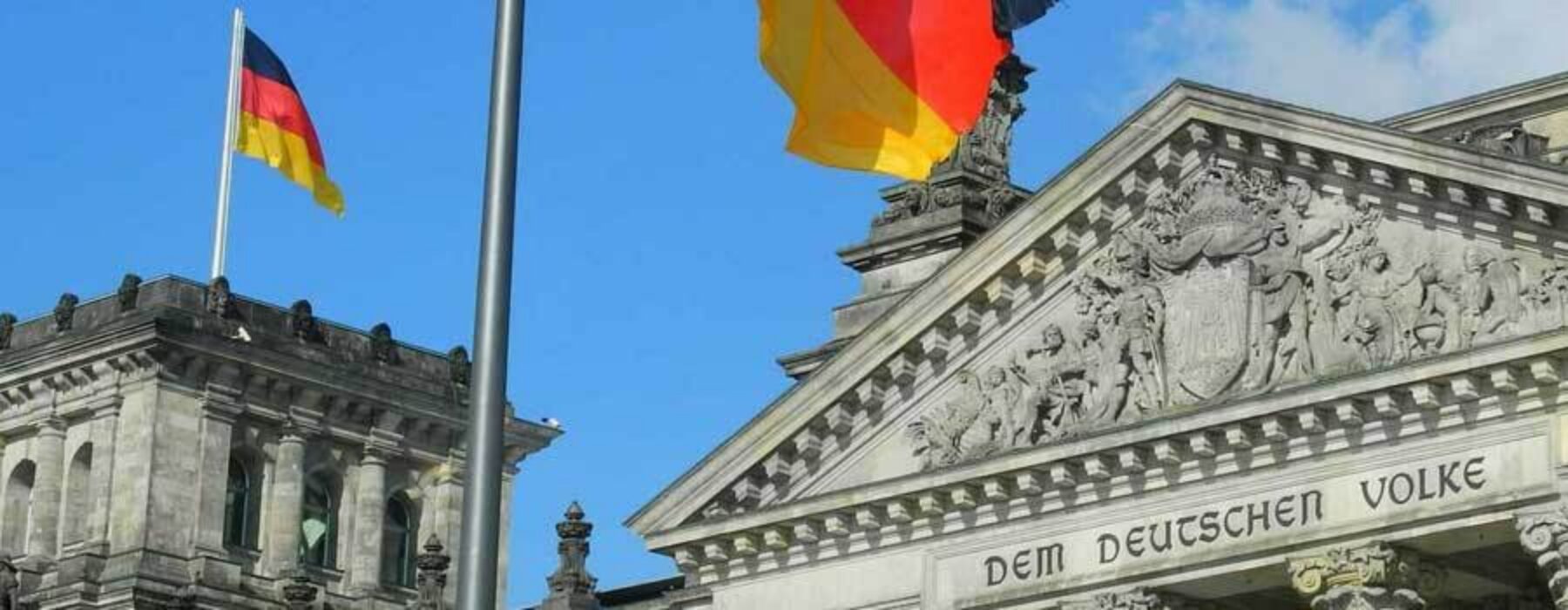
The FDP parliamentary group in the German Bundestag has submitted a motion aiming to improve the legal and remuneration framework conditions for game designers. kulturgutspiel.de documents the preliminary version of the motion.
Printed matter 19/23682 – German Bundestag – 19th electoral term – 27.10.2020 – Preliminary version – will be replaced by the edited version.
Motion by the Members of Parliament Thomas Hacker, Katja Suding, Renata Alt, Jens Beeck, Mario Brandenburg, Sandra Bubendorfer-Licht, Dr. Marco Buschmann, Britta Katharina Dassler, Christian Dürr, Hartmut Ebbing, Dr. Marcus Faber, Otto Fricke, Thomas Hacker, Reginald Hanke, Peter Heidt, Katrin Helling-Plahr, Markus Herbrand, Torsten Herbst, Katja Hessel, Reinhard Houben, Ulla Ihnen, Dr. Marcel Klinge, Daniela Kluckert, Pascal Kober, Konstantin Kuhle, Ulrich Lechte, Thomas Sattelberger, Dr. Wieland Schinnenburg, Hermann Otto Solms, Gerald Ullrich, Nicole Westig and the FDP parliamentary group
Recognising games and game designers – Improving legal and remuneration framework conditions
The Bundestag resolves:
I. The German Bundestag establishes:
Games have always conveyed values, fostered a sense of community, encouraged deceleration and brought people joy. Games – whether analogue or digital – are recognised as cultural assets; however, they have a societal relevance that is often underestimated, not least as a widely used educational medium. It is all the more surprising that traditional – analogue – games lag behind their digital counterparts in terms of cultural recognition and appreciation in some areas. This cannot be due to a lack of market penetration or relevance – board, dice and card games in particular enjoy great popularity and, as representatives of analogue games, are an important part of a significant economic factor.
Revenue from analogue games grew from €450 million to €550 million between 2010 and 2018 (https://de.statista.com/infografik/19743/um-satz-mit-digitalen-spielen-und-gesellschaftsspielen-in-deutschland/). German games are successful both nationally and internationally. The high export rate of 66 percent underlines the international reach and recognition of German games worldwide. The large number of new analogue games released annually (around 1,200) highlights the innovative strength of the industry and Germany as a cultural hub. Games consistently enjoy high popularity across all age groups. Only 13 percent of the population do not play games. Given this success story, it is no surprise that there are currently around 130 game publishers in Germany. However, the starting point for this thriving industry is the creative individual. The game designer creates traditional – analogue – games and thus represents the counterpart to the game designer who, in turn, creates digital games.
Games, like books, are part of a holistic cultural mission and have a firm place in society. As a result, analogue games are increasingly sold in bookshops or borrowed from libraries. Public libraries’ accessibility enables the entire population to participate in this cultural and educational treasure. Not only do the games deserve recognition, but so do their designers, who continually enrich and develop the gaming landscape through their creativity. However, it is crucial that game designers are appropriately remunerated for games used in libraries. To date, there is no comprehensive digital database for recording, archiving, author billing, evaluation, training and research, even though the complete collection, permanent archiving and bibliographic recording of all German and German-language publications is the primary task of the Deutsche Nationalbibliothek (DNB). The DNB thus symbolically represents German cultural heritage. At the same time, the DNB’s data collection also serves a financial purpose, as it forms the basis for the distribution of library royalties by the collecting society VG Wort. Furthermore, the Deutscher Kulturrat has been calling for the inclusion of analogue games in the DNB’s collection catalogue since 2015 (https://www.spieleautorenzunft.de/files/public/Nachrichten-News/DKR%2015%2006%2024%20%20Ana-loge%20Spiele%20in%20den%20Sammlungskatalog%20der%20DNB%20aufnehmen.pdf).
Since analogue games are currently excluded from the DNB’s collection mandate and no other nationwide inventories exist, game designers and publishers are denied a legal claim to library royalties. This regulatory gap appears particularly unintended in light of Section 3 of the DNB Act and must be closed as soon as possible. After all, the rules of the game, embodied in written form, represent the intellectual core of analogue games and should be treated as literary works on a par with books and comparable publications. This is all the more important because the current reporting and data basis for non-digital games is more than patchy and fragmented, and there is no equivalent to the Verzeichnis lieferbarer Bücher (VLB).
Adjusting the legal framework is more than necessary. The corona crisis in particular has shown how precarious the remuneration and thus the living situation of many creatives can be. The security of regular and predictable distributions by VG Wort should be pursued to ensure fair distribution practices and comparability with other works protected by copyright and related rights.
II. The German Bundestag calls on the Federal Government to
1. work towards the creation of a uniform database for the cultural asset of board and card games;
2. work towards ensuring compatibility and interoperability of the database to be created with the Deutsche Nationalbibliothek (DNB) or other nationwide inventories such as the Verzeichnis lieferbarer Bücher (VLB);
3. work towards finding effective and practical solutions to grant game designers the legal claim to library royalties under Section 27 of the Copyright Act;
4. examine the extent to which the scope and amount of the annual remuneration sums borne by the federal and state governments to settle library royalties under Section 27(2) of the Copyright Act need to be adjusted;
5. either adapt the DNB’s collection guidelines and the mandatory deposit regulations accordingly to include analogue games in the DNB’s collection catalogue, or find alternative equivalent solutions, such as via the VLB;
6. if implemented via the DNB, take the additional tasks into account in budget planning and adjust the budget accordingly within the available financial resources.
Berlin, 27 October 2020
Christian Lindner and parliamentary group
“The governing majority will probably not adopt our motion”
Three questions to Thomas Hacker, media policy spokesperson for the FDP parliamentary group in the German Bundestag and lead representative on the Committee on Culture and Media
How do you assess the chances of success for the motion?
As the opposition, we naturally have to look at our motion realistically – the governing majority will probably not adopt it, even if they may share some of its content. However, for us Free Democrats, it is crucial to underline our political stance on this issue through the motion and to initiate a parliamentary debate. Improving the framework conditions for game authors has not been taken up by any other parliamentary group, and no one has addressed this important topic. First, the motion must be discussed in the Committee on Culture and Media before it is reconsidered in the plenary with a recommendation for a resolution. It is difficult to assess the other groups’ discussion points in terms of content, especially since both the Spiele-Autoren-Zunft and the Deutscher Kulturrat support the motion’s goal. One possible point of criticism might be that the Deutsche Nationalbibliothek is already overburdened and that additional budget funds would have to be provided for this during the corona crisis.
The motion addresses several demands from the Spiele-Autoren-Zunft (SAZ). Does the FDP also support the SAZ demand for VAT equalisation of games with other cultural goods, i.e. the demand to tax analogue games at the reduced rate?
In tax law, we generally pursue an approach that creates clarity and relief for citizens. The German tax system and the various VAT rates must be simplified – in other words, consolidated. This can only succeed if we establish a uniform VAT rate. What this rate will specifically look like must then be decided.
The digital games industry (games sector) receives €250 million in funding in Germany. Is the FDP in favour of also providing financial support to the analogue games industry?
As Free Democrats, we are generally rather sceptical of state funding – especially when it does not reflect reality and interferes with competition. Funding should only be a last resort and must always be considered in the overall context – the industry, national and European framework conditions. The digital games industry currently receives support from the Federal Ministry of Transport and Digital Infrastructure because there is a gap between national production and the national sales market, and other EU states are heavily subsidising the sector themselves. Funding may be advisable to engage in location and technology competition. To my knowledge, there is no market failure or such a market and business imbalance in the case of analogue games. Moreover, funding would also fall under the responsibility of the Minister of State for Culture, where fewer budgetary resources are available by default.
We asked these questions in January 2021 via email.
Update on 8 August 2021
The FDP motion was discussed in the leading Committee on Culture and Media and rejected there in March 2021. We have documented the discussion and the reaction of the Spiele-Autoren-Zunft (SAZ) to the rejection.