
30 years of Catan: “We’re waiting for the right moment”

For thirty years, Catan has been captivating people all over the world. To mark the anniversary, we asked Benjamin Teuber thirty questions – about pirated copies, the film based on the game, and his father, the creator of Catan.
Catan was released in 1995. Klaus Teuber developed it in his spare time; at the time, he worked as a dental technician. His son Benjamin joined the family business in 2010. Since the death of Klaus Teuber, he has been running Catan GmbH together with his brother Guido.
1. Which question about Catan can you no longer stand?
Why the switch from wood to plastic?
Originally, the game was delivered with wooden pieces. From 2003 onwards, the switch to plastic was made.
2. Was that one of the few wrong decisions of recent years?
The switch was controversial. Whether it was a mistake depends on who you ask. Plastic was considered progress back then, something that gave the game more expression. “Imagination comes to life” was our motto. That went down very well.
What we underestimated was the emotional attachment many players had to the wooden pieces – the nostalgia that came with them. Today, the choice between wood and plastic is a generational issue: those who grew up with plastic find the figures more detailed and beautiful, while for others, wood is simply part of it.

3. Why is Catan still being played after thirty years?
Harvesting, trading and building are timeless activities that appeal to people today just as much as they did thirty years ago. Catan offers high interaction and little downtime. It has a good mix of luck and strategy. That appeals to many people. The social aspect is also important. The variable setup and expandability add extra variety.
4. How do you keep a brand like Catan fresh without diluting it?
It’s a tightrope walk: you have to move with the times while preserving the brand’s core.
5. What does that mean in concrete terms?
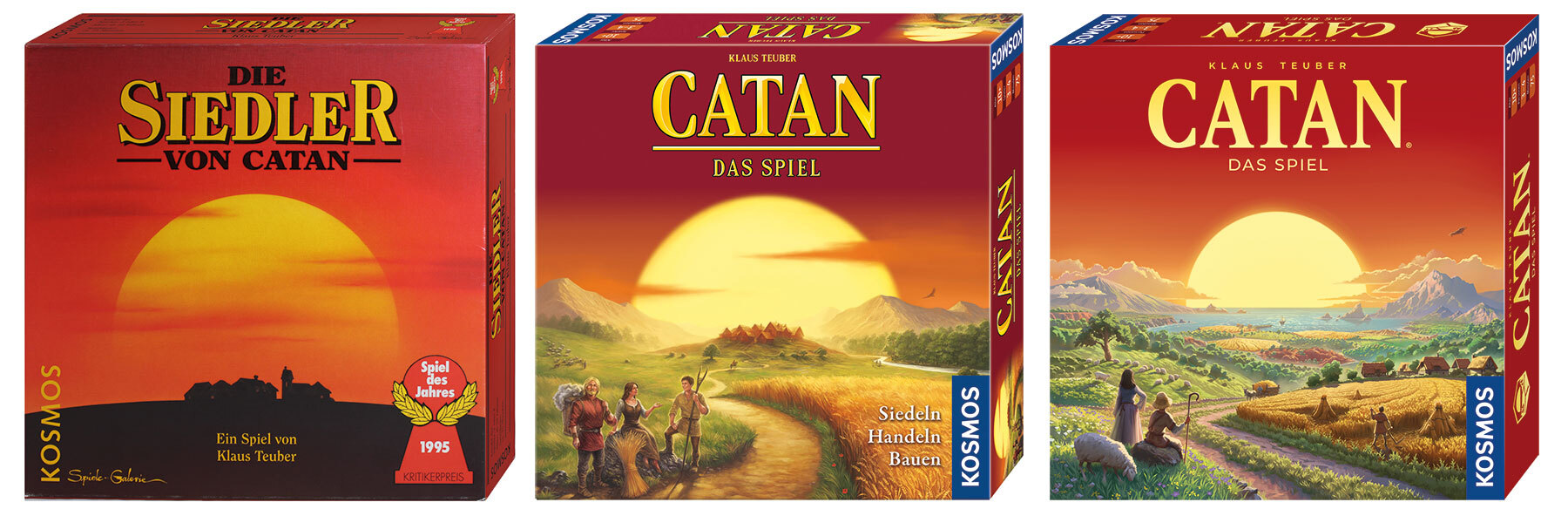
Initially, there were hardly any guidelines. In Japan, the box looked different from Germany, and in Germany, it looked different from the USA. In 2015, we decided to standardise the brand worldwide. That was a huge step. Michael Menzel gave the game a modern look. For the thirtieth anniversary, we revised the illustrations again. Quentin Regnes designed the box, and Eric Hibbeler designed the game components. Both have brought Catan into the present day without losing its recognisability. Even today, the yellow sun still shines against the red background.
The rules are also part of the brand’s core. Fortunately, we’ve never had to change them. The only exception: with the expansion for five to six players, we improved the special building phase. Previously, everyone could build during this phase. Now, only one person can. This makes the game faster and clearer.
Brand maintenance also involves telling new stories – thematically and in terms of gameplay. An example of this is Catan – Neue Energien. We didn’t publish the game to deliver a new game, but because we find the topic exciting and it fits well into the Catan world.
This year, we’re looking forward to the world record attempt at SPIEL 2025 in Essen. We want to play Catan simultaneously with 1,200 people. Such events keep the brand alive. They show that Catan is not just played, but experienced.

6. Has the target audience changed over the years?
We have a recurring cycle: initially, in Germany, mainly students played Catan. The enthusiasm quickly spread to families, who played it with their children. When the children later went to university, they played it again. Today, many people have Catan at home. It’s considered a modern classic. The target audience is broader and spans generations: parents play with their children, grandparents with their grandchildren.
In countries where Catan was released later, the development is partly comparable – just delayed. In the USA, the Catan craze began in the tech and startup scene, especially in Silicon Valley. This was followed by actresses and athletes, then families.
Mayfair published The Settlers of Catan in the USA in 1996. Unlike in Germany, sales started slowly. The article “Monopoly Killer: Perfect German Board Game Redefines Genre” in Wired magazine brought the turning point in 2009. As a result, many celebrities revealed themselves as Catan fans.
7. Why is Catan so popular in Silicon Valley of all places?
LinkedIn co-founder Reid Hoffman said he used Catan in job interviews. He wanted to see how people think, negotiate and interact with each other. This made waves at the time, among others, the Wall Street Journal reported on it. Catan suddenly became the new golf. Instead of on the golf course, business was discussed over pizza and Catan.
8. Which famous players are there?
In addition to tech giants like Bill Gates or Mark Zuckerberg, Hollywood stars also love Catan. Actress Kristen Bell and her husband Dax Shepard played Catan in 2017 after the Golden Globes instead of going to parties. The game has also made it into pop culture. It appears in series like “The Big Bang Theory” or “South Park”.
In the past 30 years, over 45 million copies of Catan and its expansions have been sold worldwide, including 8 million in Germany. Based on population, the most copies in Europe have been sold in the Netherlands. The most important market is now the USA.
9. There are still regions without local editions. Why?
Catan is available in more than 45 languages. Through English or Spanish, we cover many regions. Both languages are spoken in many countries, sometimes across entire continents. That explains why Catan is played in more than a hundred countries.
Why Catan isn’t available in some countries can’t be answered in general terms. Often, it’s a combination of linguistic diversity, legal hurdles and economic conditions. One example is India: Catan is available in India, but the game isn’t as present with its original edition as we would like. India is a large but also complex market. Even the question of which language to publish Catan in there is hard to answer: Hindi, Tamil or English? In addition, there are differences in purchasing power and legal particularities that make brand protection difficult. We can see from the top 100 rankings on Amazon that Catan is indeed bought in India. Sometimes we’re even in the top 100 three times with Catan, unfortunately not with the original game, but with counterfeits. These are of such poor quality that they damage the brand.
And then there are countries where market entry is impossible or unrealistic, for example North Korea.
Whether digital or analogue: the Catan brand is protected by copyright and trademark law worldwide. Until 2015, counterfeits barely played a role. Then, suddenly, sales plummeted. At the same time, negative customer reviews increased. The trigger was a growing number of counterfeits.
10. Is product piracy only a problem in India?
No, unfortunately not. Board games are easy to copy. They usually consist of just cardboard, wood or plastic. The first major case we noticed was a few years ago. At the time, an American customs officer discovered a thousand counterfeit Catan games from China, even though the packaging said “Made in USA”. The counterfeits were shipped worldwide. They were so good that at first glance they looked like the originals. This was a problem for us because of the violation of intellectual property. Also, many people didn’t realise they were buying counterfeits. They were angry because the quality of the copies wasn’t as good as the originals.
11. How did you solve the problem?
It’s not efficient to take legal action against counterfeiters – especially with counterfeits from abroad. There, you figuratively cut off one head of the Hydra and three new ones grow back. Instead, we now rely on technical tools. There are companies that specialise in combating product piracy. Their programmes automatically find suspicious offers online, for example when Catan costs just 15 euros.
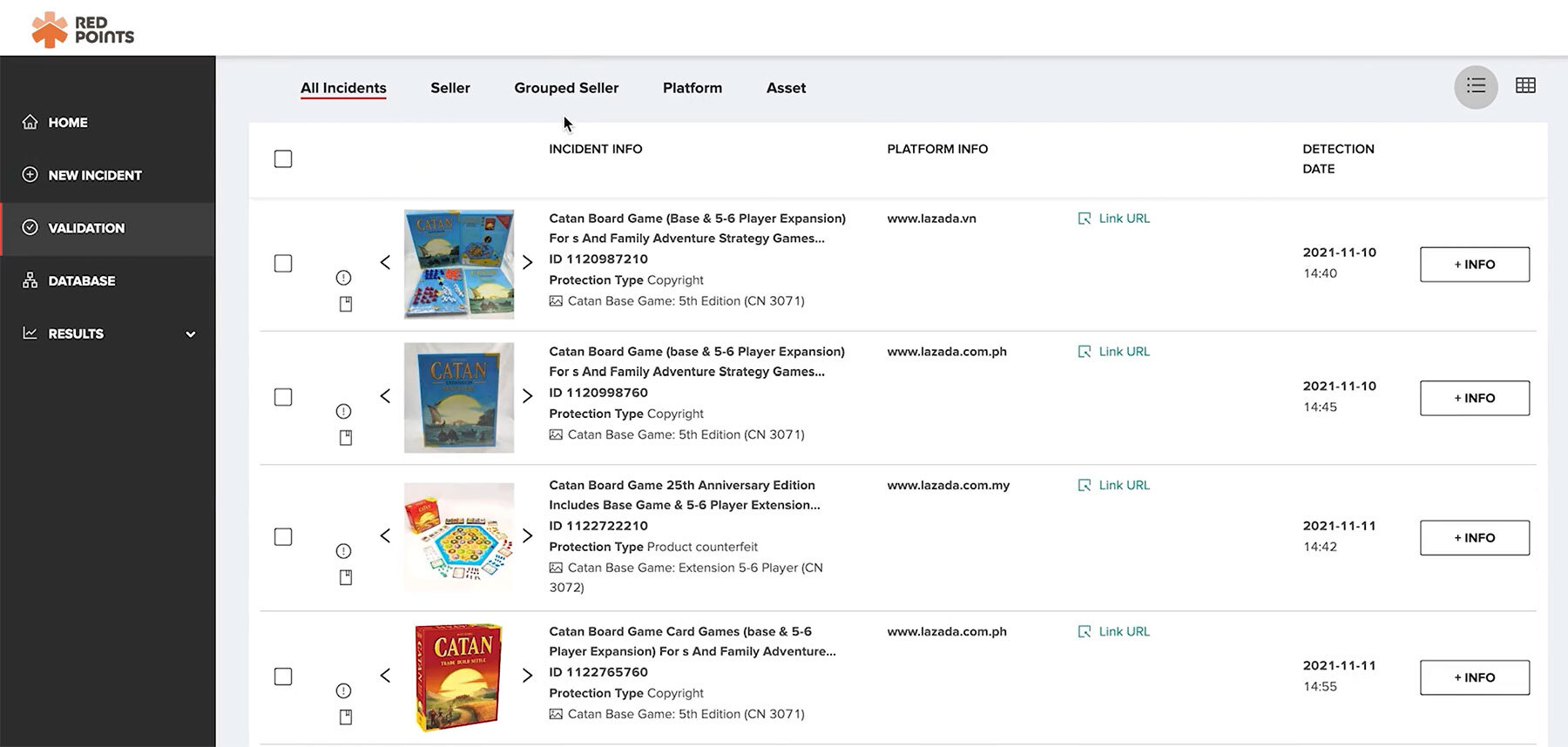
Catan Studio is a subsidiary of Asmodée. The company publishes all English-language Catan games. To combat product pirates, Catan Studio works with software companies such as Red Points. From 2015 to 2020, according to Red Points, almost a quarter of a million counterfeit games were removed from circulation and damage of over seven million US dollars was prevented.
12. When people buy the original today, do they go for the base game? Or do you sell more expansions?
No matter how many expansions or new versions come onto the market: at the end of the day, it’s always the classic red box that sets the tone. The base game still sells at a high level. In recent years, we’ve even seen a slight increase in sales figures.
13. How should Catan develop in the next thirty years?
My heart’s desire would be for Catan to still be standing on shelves as a modern classic in thirty years’ time. For people to say: I know that game from back then – it’s still fun. Personally, I hope that in thirty years I’ll still be creative enough to bring new ideas to Catan.
14. There are countless licensed editions of Monopoly, but not of Catan. Why?
That’s because we handle the brand very consciously. It’s not about bringing as many variants onto the market as possible. We only publish a licensed version if it fits the world and spirit of Catan. The game stands for peaceful exploration, communal settling and strategic thinking.
15. Then why Catan – A Game of Thrones? The series is known for violence and intrigue.
True, but in A Game of Thrones, people beyond the Wall work together to fend off a threat. This story fits Catan. Another example is Star Trek. We deliberately chose this licence. Exploring new worlds, peaceful coexistence and the moral background fit us. Star Wars would have been the stronger licence, but thematically too combative.

16. Catan exists as a game and a book: when is the film coming?
There are regular talks with potential partners. We’ve had exciting offers on the table but have always declined so far. It’s important to us that a film adaptation captures the spirit and feeling of Catan and isn’t just a random adventure on an island. We’re waiting for the right moment and the right execution. Let’s see what the future brings.
17. Apart from licences: how do you decide which new Catan games to develop?
The decision about which expansions we develop is mainly driven by interest and inspiration. Often, a theme or a story we want to make playable gives us the impetus.
An example of this is Catan – Neue Energien. The idea came about over ten years ago when the energy transition was being widely discussed in society. We were attracted by the idea of turning this shift towards a sustainable world into a playable experience. With Catan – Aufstieg der Inka, the theme also came first: the high cultures of the Andes, which flourished for centuries, declined and were displaced by new tribes. The game mechanics almost emerged by themselves from this: three civilisations rise and fall in succession. Whoever triggers the last golden age wins.
Of course, we also keep an eye on market developments. If the cost of living rises and games become more expensive, we consider whether we can design a more affordable game. But the idea is always at the centre.
In autumn 2024, Catan – Neue Energien was released. It is the last game by Klaus Teuber. He developed it together with his son Benjamin. Klaus Teuber died on 1 April 2023 at the age of 70 after a short, serious illness.
18. How did your father come to develop games?
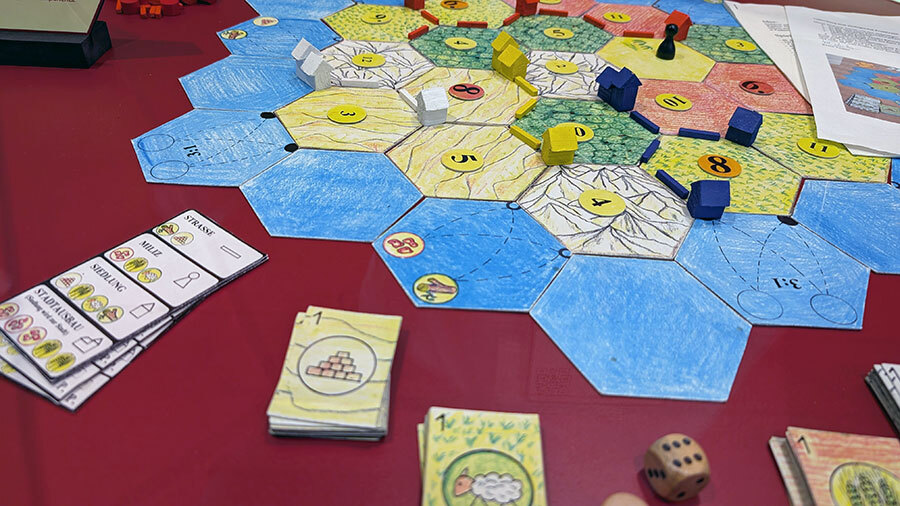
My father was born in 1952 in a small village in the Odenwald. Board games were barely a topic in his early childhood. At the age of eleven, he received Römer gegen Karthager and began to develop his own rules. After studying chemistry and joining the family dental laboratory, he looked for a balance to his stressful professional life in the early 1980s. He began to develop games. In 1988, he won the “Spiel des Jahres” award with his first published game, Barbarossa und die Rätselmeister. In 1995, he achieved his breakthrough with Die Siedler von Catan.
19. What did you learn from your father about game development?
One of the most important lessons I’ve learned is patience. Developing games isn’t a sprint, it’s a marathon. There were ideas that needed fifty iterations before they worked. Sometimes it takes years.
Benjamin Teuber developed his own game ideas even as a child. His first prototype was created at the age of five. Many years later, he joined his father in professional game development. Their first joint game, Tumult Royal, was released in 2014. Apart from the Catan games, none of their games achieved lasting success.
20. How can the fascination of Catan be described in one word?
Interaction
In Catan, conflicts are resolved through negotiation – not through attack or destruction. Those who create many win-win situations have the best chance of winning. Especially today, this is a valuable message.
Benjamin Teuber, Geschäftsführer Catan GmbH
21. Which game from the Catan world is your favourite?
I always like the most recent game best because we usually work on it for a very long time – right now, that’s Catan – Neue Energien. My all-time favourite is Catan – Aufstieg der Inkas. It picks up the rules of the base game but creates a completely different gaming experience.
22. And which Catan gimmick do you particularly like?
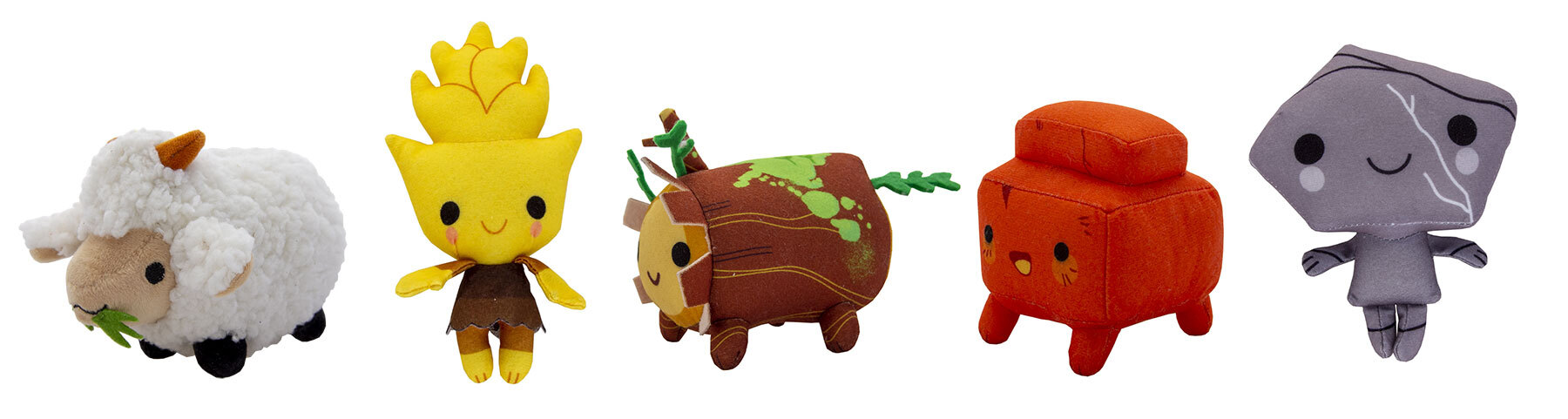
There was a sheep. It went ‘baa’ when you pressed a button. Extremely loud, extremely annoying, but simply wonderful. With it, you could drive the entire office mad. As absurd as it was, we laughed so much with it. I also love the Catanimals. They were plush versions of the resources. Each figure had its own character. They made the world of Catan emotionally and narratively tangible. The Catanimals were like little ambassadors of the game.
23. Your favourite character in the Catan universe is the robber. Why?
To me, he is a misunderstood figure. The robber doesn’t act on his own initiative. He is pushed around by the players. Then he also has to steal resources, even though he didn’t choose to do so.
He is a likeable chaotic character with a small gang he has to take care of. He stands for trouble, but he’s a character full of humour, depth and a touch of tragedy. That’s what makes the robber one of the most charming figures in the Catan universe for me.
Klaus Teuber founded the Catan GmbH in Roßdorf near Darmstadt in 2002 together with his wife Claudia and his sons Guido and Benjamin. The family business develops, markets and licenses Catan games. Today, Benjamin and Guido run the company.
24. Almost all of your working time revolves around Catan. Is this a curse or a blessing?
It’s a blessing. I never intended to join the family business. After studying psychology and management, I initially worked in other fields. At some point, I realised: what could be better than working with my family on a brand that is known worldwide and stands for positive values? Working with my father was a great gift. We always had a good relationship, and our joint work made it even closer.
If it ever became too much or too boring, I could stop at any time. Everyone is replaceable. But I don’t want to. I get up every morning happy and look forward to work.
25. Which games do you like besides Catan?
I like party games such as Stille Post Extrem. My friends don’t enjoy them as much. That’s why I only bring simple games to the table with them. It’s about laughing together and having fun – party games are perfect for that.
26. What makes a good game?
For me, a good game thrives on a balanced mix of strategy and luck – just like life. A lot can be influenced by smart decisions and planning. But there are moments when luck plays a part – or doesn’t. What’s important is that you can almost always influence your situation, no matter how good or bad it is at the moment. This mix is perfectly reflected in Catan for me. You forge your own luck, make decisions, but you also have to work with what the game gives you.
27. You don’t just take care of the analogue board games but also digital Catan variants. How important are these?
The analogue game is our biggest revenue generator. Catan unfolds its greatest strength at the table, in direct interaction. This is reflected in the sales figures. The digital area is a valuable addition. It brings people to the game who might not have discovered it otherwise.
The digital version is ideal for anyone who doesn’t have fellow players nearby or wants to play a spontaneous round. I see this with my wife: she didn’t know the game when I met her eleven years ago. Today, she’s hooked on the digital Catan variant. She plays constantly, while brushing her teeth, while watching TV. For her, it’s almost like meditation.
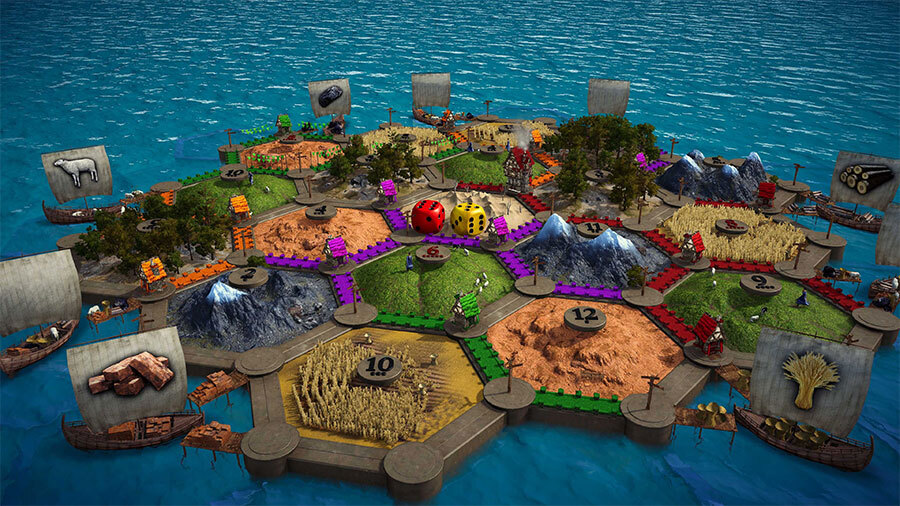
28. In the digital world, the computer monitors compliance with the rules. At the living room table, this support isn’t available. Which rule is most frequently ignored?
In fact, the mistake often happens during setup: many people don’t know the ABC system, which my father developed with the editorial team. This involves placing number tokens in a specific order. This way, frequent numbers like 6 and 8 are not placed next to each other. This keeps the game board balanced.
Another classic is the distance rule. There are always questions about this. When placing settlements, there must be at least two roads’ distance to the next settlement or city – in all directions.
29. And which house rule do you like best?
We’ve established the friendly robber: he can only be placed next to someone if that person has at least three victory points. This ensures a relaxed start.
30. Final question: wood or plastic?
I have both versions at home and play with one or the other.
The creation of Catan
Before Klaus Teuber developed Catan, three of his games had already won the title “Spiel des Jahres” – Barbarossa, Adel verpflichtet and Drunter & Drüber. Catan did not emerge from a drawing board but as a story about settling an island during the Viking Age. After extensive testing within the family, the original working title Kolonisation eventually became Die Siedler. Due to a computer game with the same name, the title was extended to Die Siedler von Catan. The name Catan was chosen from ten fantasy names because it sounded particularly pleasant and catchy.
Despite initial scepticism from publishers, Kosmos released the game in 1995 with a novel square packaging format and a new rule concept. Instead of a conventional rulebook, a three-part game tutorial explains the rules during play. The courage paid off: the initial print run of 3,000 copies sold out quickly. Die Siedler von Catan won “Spiel des Jahres” and has since achieved high sales figures.