
Alex Randolph: “You have to seek out luck”
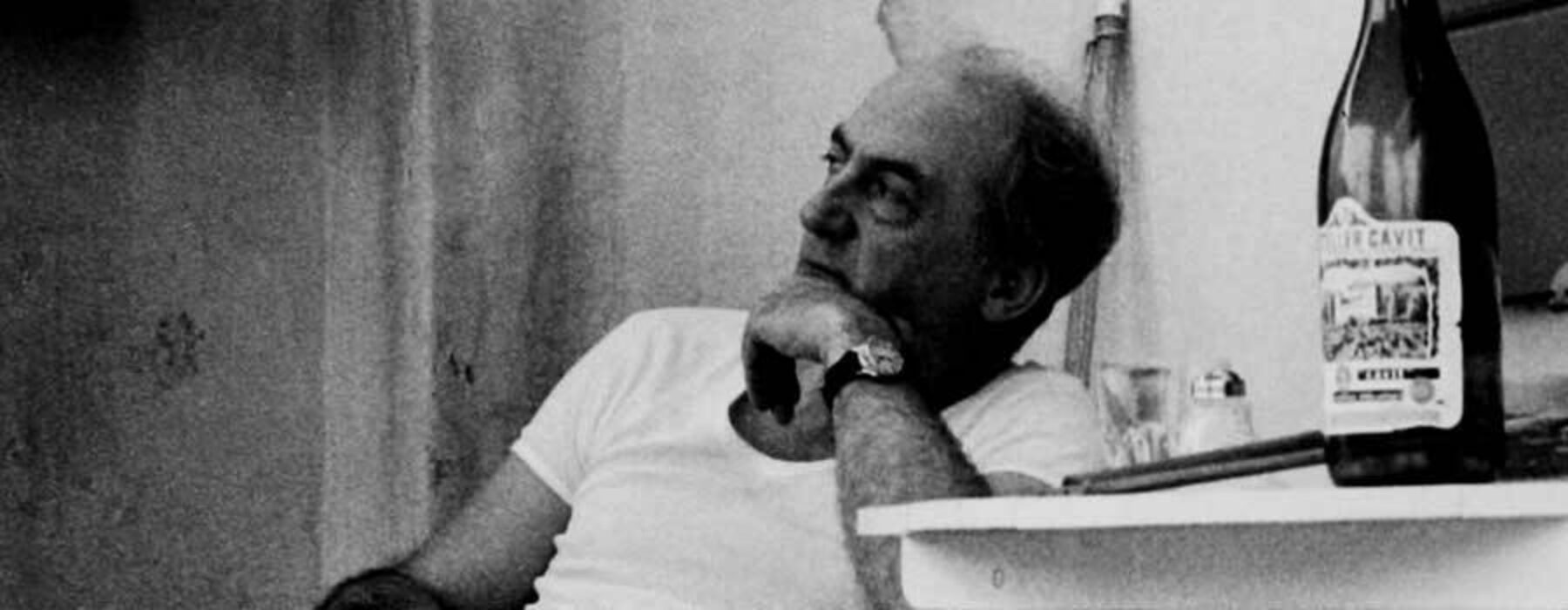
He was the guru of the games industry: Alex Randolph, inventor of many award-winning games. Eight years after his death, a book about his life is now being presented in Frankfurt. Sebastian Wenzel has read it and afterwards conducted a private – albeit fictional – conversation with the master.
Note: This article first appeared in 2012 on zuspieler.de.
Alex Randolph is the inventor of the game inventor. His board and card games were so successful that he convinced publishers to print his name on the box. This used to be unusual; today it’s taken for granted. In 2004, the industry’s guru died. Yet he remains unforgotten. At the Frankfurt Book Fair, the publisher “Drei Hasen in der Abendsonne” is now presenting a book about his life. It’s a read that’s as exciting and varied as Randolph’s games were. But what did the master think about the big questions? About luck? About play? And about the nature of modern humans? We asked. In a fictional interview. And even though this conversation unfortunately never took place: the answers are authentic. They come from Randolph himself, from his book.
Mr Randolph, the book about you is called “Die Sonnenseite – Fragmente aus dem Leben eines Spieleerfinders”. How unhappy are you with the subtitle?
Game inventor – that’s the title I gave myself. It’s a bit ridiculous, a little pompous, but I like it. People smile when they hear it. In life, you need a label, otherwise you’re nobody.
You created classics like “Sagaland”, “Tempo, kleine Schnecke” or the card game “Hol’s der Geier”. How do you invent such brilliant games?
There’s of course no method or guide. But there’s something else: a state of mind. You just need to live alert. Because whatever you do, life is more interesting and enjoyable when all the spotlights are on. Unfortunately, many people are half switched off. And that’s a shame, because under such conditions, you can’t invent.
Was it different in the past?
Cave dwellers were attentive, alert. Their senses: active – not passive like ours. Their sense of hearing, their sense of smell… I imagine they were constantly taking in their surroundings, and I mainly think of their gaze, which pierced through everything, noticed every little detail, every little movement. Nothing escaped them. Today, there are only a few specialists who observe in this way, like detectives… or thieves.
How much work is it to turn an idea into a finished game?
I honestly feel that I never work, because the word work doesn’t fit what I do. I can’t stand it when people talk about work being a good thing. Work is a bad thing. Work dulls you. And I’m especially thinking of physical, mindless, degrading work. What you do voluntarily, out of joy in doing it, that’s not work. A painter doesn’t work, a poet doesn’t work, a game inventor doesn’t work: they do what they love to do.
Even so, most authors can’t make a living from their games. For them, inventing games is more of a hobby…
… I don’t like the term hobby, it’s a word that goes against the grain for me, because I think it should be the other way around. Spinoza, his livelihood was lens polishing. And philosophy? That was his hobby. That is, his joy, his reason for living. I believe that the important part of life is what we call a hobby. The rest only serves to allow us to pursue our hobby with pleasure.
So why do so few game authors turn their hobby into a profession?
It’s claimed that we descend from apes, those cheerful animals that live in trees. But I don’t believe that. We come from the earth; our ancestors were rodents. Small animals that tremble all the time, living in their tunnels underground, where they build small nests and start small families. Every now and then they stick their noses out, look around, would love to come out… but then they tell themselves: better not. And that’s the motto of most people: better not.
What advice do you give your colleagues, then?
Luck doesn’t mean it’s enough to wait for it to come. You have to look for it. And you have to recognise it, not miss the opportunities that present themselves. And that happens every day.
All quotes from Alex Randolph are from the book “Die Sonnenseite – Fragmente aus dem Leben eines Spieleerfinders”. It was published in 2012 by “Drei Hasen in der Abendsonne”, has just under 140 pages and cost just under 20 euros in October 2012.